Advanced PP Woven Bag Cutting Machines for Reliable Bag Production


PP woven bag cutting machine technology plays a critical role in today’s packaging and bulk material handling industries. Due to a growing requirement for Polypropylene Woven Bags through a variety of applications including Agriculture, Cement, Fertilizer, Food Grain, Chemical, and Industrial Packaging, the demand for PP Woven Bags continues to climb across several industries. Because these volumes have increased several times, Producers are now experiencing higher levels of pressure to manufacture these PP Woven Bags quickly. However, these producers also want to make sure they continue to manufacture the PP Woven Bags with the correct dimensions, strength, and appearance. In addition, Manual Cutting and Stitching Systems are not an option for Manufacturers looking to increase their manufacturing capacity.
An estimate suggests that there are an increasing number of items produced per square foot in both lengths and widths and an increasing amount of labor costs associated with producing these items due to the increased amount of material wastage resulting in lower profit margins. As such, Manufacturers are utilising a Fully Automatic PP Woven Bag Cutting Machine solution, which assists them by offering accuracy, speed, and repeatability for extensive manufacturing cycles.
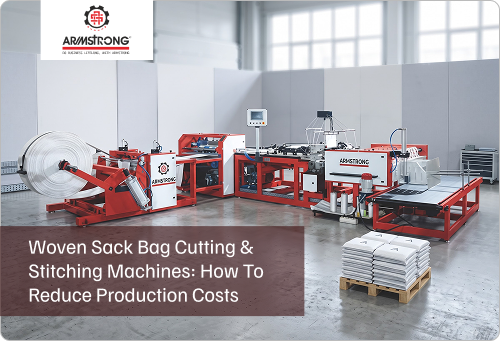
A pp bag cutting machine automates one of the most critical stages of woven bag manufacturing. Industry experts widely agree that cutting accuracy determines downstream stitching quality, stacking uniformity, and overall bag performance. When integrated with stitching, printing, or ultrasonic systems, cutting machines form the foundation of a fully automated woven sack production line.
Modern factories increasingly rely on automatic pp woven bag cutting machine systems powered by servo motors, PLC controls, and precision feeding mechanisms. These machines are ideal for bulk cutting of PP woven bags, ensuring uniform lengths, reduced fabric waste, and stable output, even during extended 24/7 operation.
In this blog, we’ll explore how PP woven bag cutting machines work, the different types available, how to select the right solution for your factory, and why automation is essential for long-term competitiveness.
A pp woven bag cutting machine converts fabric rolls into accurately measured bag lengths ready for stitching or further processing. Distributed evenly across a series of rollers driven by servo motors. The fabric is unwound while under tension that is measured using either encoder technologies or sensors, then finalised in terms of cut length and shape using one of several methods. Advanced systems allow for consistent and correct tension leading to no distortion of the fabric, stretching of the fabric, or uneven edges which would affect the seam strength and the aesthetic appeal of the bag in its final form. Most automatic woven sack cutting and stitching machine configurations synchronize cutting with stacking or sewing, reducing manual handling and ensuring smooth production flow.
Choosing the right machine depends on several factors: bag size, fabric thickness, required output, and automation level. Smaller plants may operate standalone pp woven bag cutting and sewing machine units, while high-volume manufacturers often invest in integrated solutions such as automatic pp woven bag cutting sewing printing machine price lines.
Modern equipment is capable of handling various plastics (PP, HDPE, BOPP) and laminate fabrics using the same equipment; therefore, manufacturers can be flexible enough to accommodate several different markets without frequently changing out machines, which is critical to being competitive.
The process begins at the unwinding station, where controlled tension feeds the fabric into the system. Operators set bag length parameters via PLC. The cutting operation—whether hot, cold, ultrasonic, or zig-zag, is executed with high repeatability and clean edges.
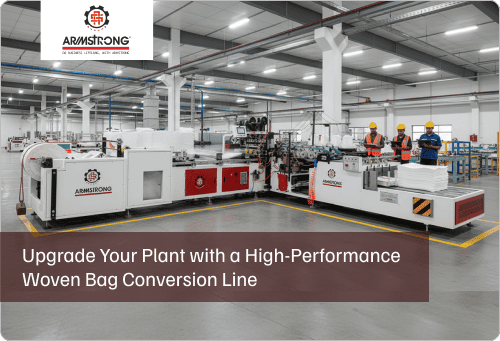
In advanced configurations, cut bags flow directly into stitching or printing sections, forming a pp woven bag cutting sewing printing line machine. This seamless integration eliminates intermediate storage, reduces labor dependency, and improves output consistency.
Manufacturers can select from multiple cutting technologies based on fabric type, bag application, and finish requirements.
Selecting the best PP woven bag-cutting machine requires balancing output demands, fabric characteristics, and automation goals.
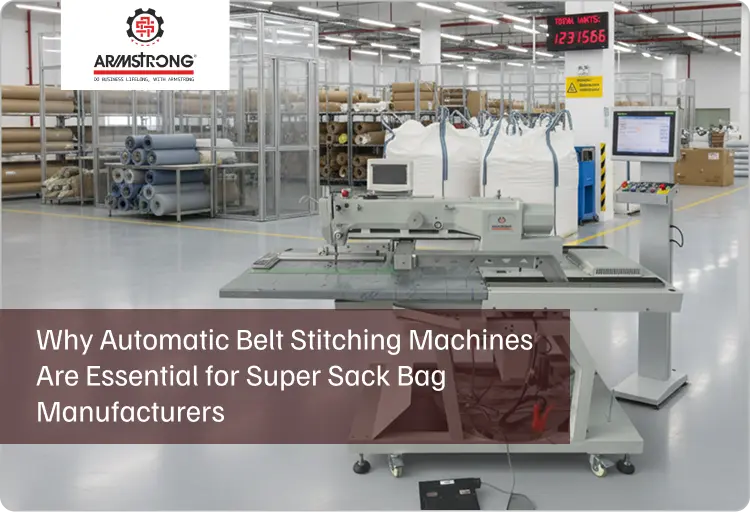
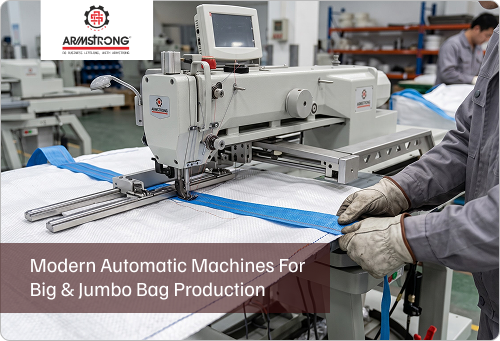
See also: Why Automatic Belt Stitching Machines Are Essential for Super Sack Bag Manufacturers
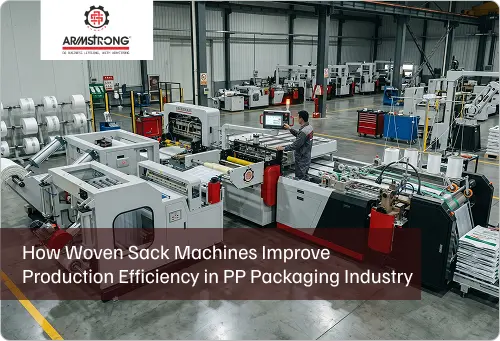
A live demonstration of an automatic pp woven sack cutting machine clearly shows its speed, stability, and precision. From fabric feeding to cutting and stacking, the entire operation runs automatically with minimal operator intervention. Such systems maintain consistent output over long shifts while reducing fatigue and human error.
Automated machines deliver consistent bag dimensions, minimize raw material waste, improve stitching alignment, and significantly increase daily output. Over time, these advantages lower operating costs and improve profit margins, making automation a strategic investment rather than a cost.
Modern machines include blade guards, emergency stop systems, overload protection, and insulated electrical panels. With proper operator training and adherence to safety protocols, machines can be safely operated during continuous production cycles.
Accurate installation is essential for long-term performance. Machines must be installed on level foundations, aligned correctly, and calibrated for fabric tension and cutting length. Electrical connections and PLC parameters should be configured by trained technicians.
Servo-driven feed rollers and sensors control fabric movement and tension throughout the cutting cycle. This ensures dimensional accuracy and prevents slippage or stretching—critical for precision cutting.
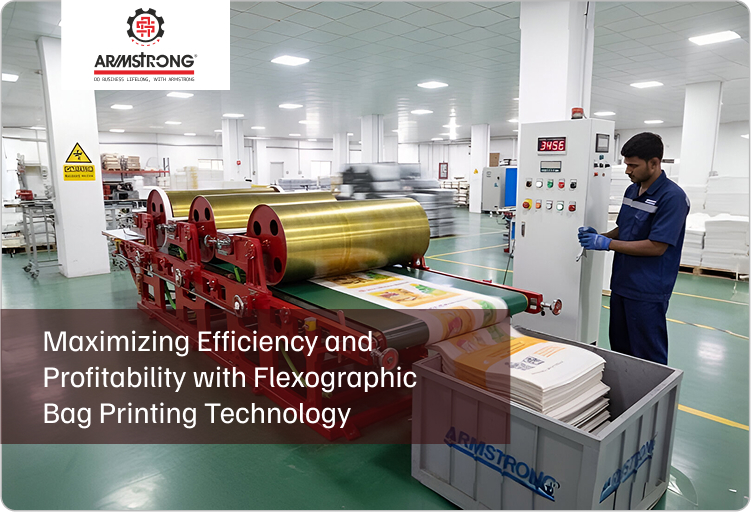
See also: Maximizing Efficiency and Profitability with Flexographic Bag Printing Technology
Different cutting methods serve different needs. Hot cutting strengthens edges, ultrasonic cutting prevents fraying, cold cutting suits specific fabric structures, and zig-zag cutting improves seam grip. Choosing the right cutting method directly affects bag durability, appearance, and stitching performance.
Routine maintenance includes blade inspection, lubrication of mechanical components, and sensor calibration. PLC diagnostics allow quick troubleshooting, minimizing downtime and simplifying repairs.
Automated machines feature compact layouts suitable for medium to large production facilities. Reliable after-sales support, spare parts availability, and technical assistance are critical to uninterrupted production.
With over four decades of industry expertise, Armstrong designs technologically advanced pp woven bag cutting machine solutions built for speed, accuracy, and durability. These machines combine cross-cutting, bottom folding, sewing, and stacking into a single automated workflow.
Armstrong machines are engineered for continuous industrial use, minimal downtime, and consistent output quality. Through in-house manufacturing, robust construction, and a global service network, Armstrong delivers scalable automation solutions trusted by woven sack manufacturers worldwide. Choosing Armstrong means investing in long-term reliability, productivity, and dependable technical support.



In today’s high-demand packaging markets, Selecting the best PP woven bag-cutting machine is essential for competitiveness. Automation improves precision, efficiency, and cost control while ensuring consistent quality across production runs. Whether standalone or fully integrated, the right cutting machine directly impacts manufacturing success.
Explore more articles on innovation, engineering, and industry leadership.
December 7, 2024
September 8, 2025
October 15, 2025
November 25, 2025
November 26, 2025
January 27, 2026
February 23, 2026
February 24, 2026
August 10, 2026
August 20, 2026
August 26, 2026
September 16, 2026
September 19, 2026
 Previous