Roll-to-Roll Flexographic Cylinder-Less Printing Machines: Fast, Safe, and Reliable

Today, speeds are not enough for packaging and industrial printing; manufacturers expect accuracy, reproducibility, low waste and consistently high-quality printings over long run lengths. These requirements have made the roll-to-roll Printing Machine an essential component of scalable manufacturing. The roll-to-roll flexo system allows an uninterrupted feed of material for high-volume prints with minimal downtime, making it the preferred printing method for Woven Sacks, films, labels and flexible packaging.
Using Flexo plates and fast-drying inks, the Roll to Roll Flexographic Printing machine is capable of printing on a variety of substrates, unlike traditional sheet-fed Printers, which allow for complete stoppage of operations, less precise registration, and reduced production capabilities when compared to flexo roll-to-roll Printers. Flexographic roll to roll printing has the efficiency and reliable results needed by companies competing in low priced as well as high quality markets.
Due to the rapidly growing demand for Flexo printers to create roll to roll coated products, there is an ongoing demand for improvements in automated processes and enhanced precision in product branding from manufacturers.
Cylinder Less Flexographic printers for roll-to-roll coating meet the expectation of manufacturers competing in low-cost and high-quality marketplaces because of its efficiencies and consistency. As a result, there have been advancements in the technology associated with Servo Drives, Drying Systems, and Digital Controls, creating a modernized flexographic Printer that provides speed, safety, and operational stability.
With the rapid growth in demand for roll-to-roll coated and branded products, manufacturers increasingly prefer cylinder-less flexographic printers for their automation capabilities and precision control.
Modern cylinder-less roll-to-roll flexo presses incorporate advanced servo drives, intelligent drying systems, and digital controls, resulting in machines that deliver speed, safety, stability, and repeatability.
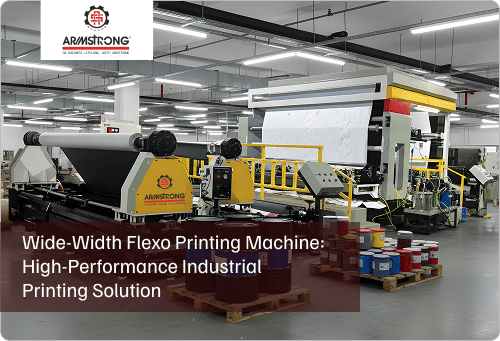
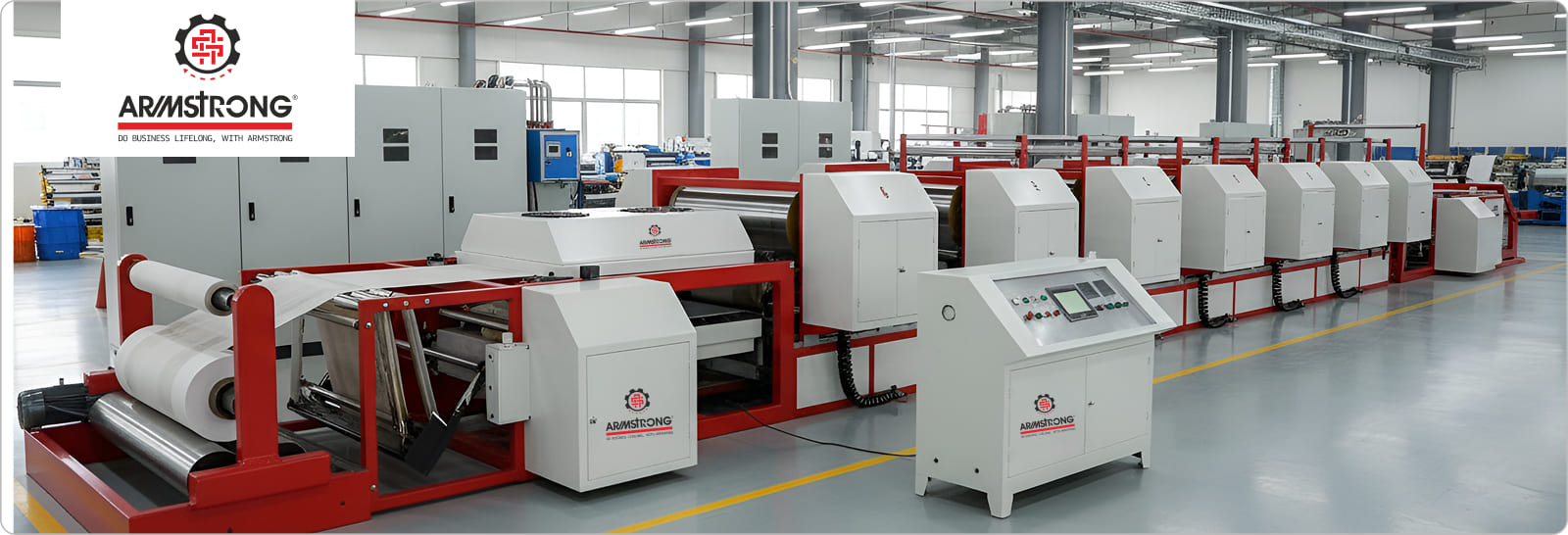
In a cylinder-less roll-to-roll flexographic printing process, a continuous web of substrate is printed across multiple color stations, dried inline, and rewound into a finished roll, all in a single pass.
This method is ideal for large-volume production with uniform designs, allowing fast job repetition without sacrificing print quality.
Servo-driven cylinder-less technology eliminates mechanical gears, ensuring smoother operation, better registration, and reduced maintenance.
A cylinder-less flexographic roll-to-roll printing machine supports substrates such as:
The combination of flexo inks and plate technology enables sharp text, solid ink coverage, and consistent image replication across long production runs.
Manufacturers prefer cylinder-less roll-to-roll flexo systems because they:
Automation features such as quick job setup, automatic tension control, servo-driven registration, and intelligent drying systems allow these machines to handle medium to large-scale production efficiently.
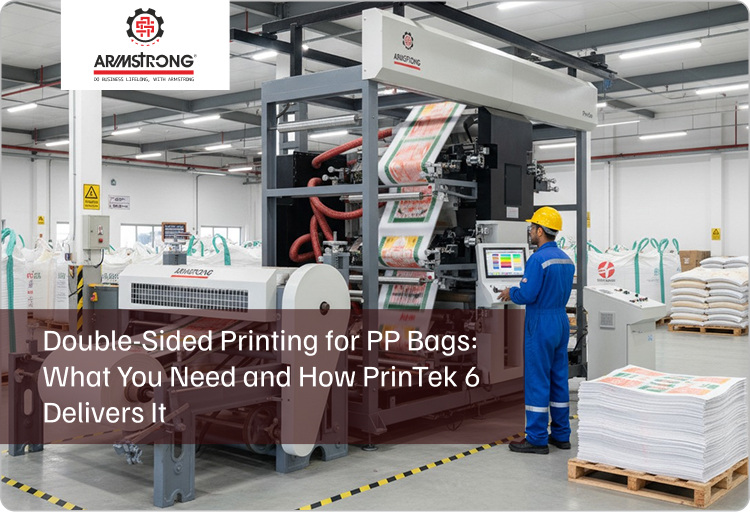
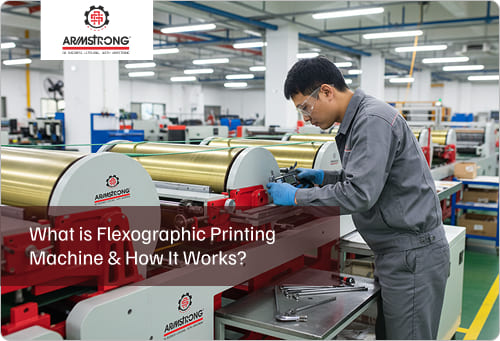
The substrate roll is mounted on an unwinder and guided through multiple cylinder-less flexographic printing units. Each unit applies ink via an anilox roller and flexible plate, controlled by independent servo motors.
Ink is dried immediately using hot air or infrared drying systems before entering the next color station.
An online cylinder-less roll-to-roll flexo printing machine allows real-time adjustments to:
This flexibility minimizes waste and maximizes process control.
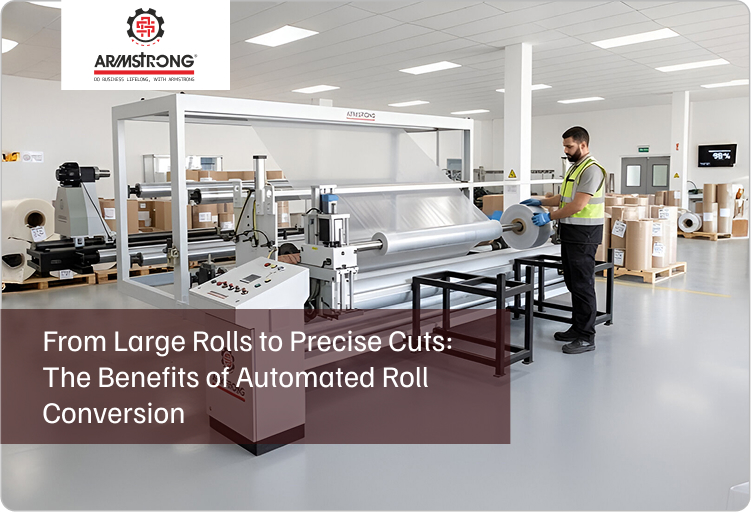
See also: From Large Rolls to Precise Cuts: The Benefits of Automated Roll Conversion
Cylinder-less flexographic printing allows printing and coating in a single pass, enabling manufacturers to apply functional and decorative coatings simultaneously.
Additional advantages include:
Cylinder-less flexographic systems offer low operating costs and excellent long-term scalability. Benefits include:
This is why many manufacturers invest in Six-Color Cylinder-Less Roll-to-Roll Flexographic Printing Machines for advanced branding and complex designs.
Armstrong has spent decades advancing cylinder-less flexographic printing technology. Their machines are engineered for continuous industrial operation, delivering consistent print quality even during long, high-speed production cycles.
Key benefits include:
Armstrong’s cylinder-less roll-to-roll flexo machines feature:
This engineering focus results in clean prints, minimal ink smearing, reduced downtime, and stable output across shifts.
The 6-Color Cylinder-Less Roll-to-Roll Flexographic Printing Machine is ideal for multi-color branded packaging. It offers:
Common applications include fertilizer bags, food packaging, agricultural sacks, and export-grade woven packaging.
Six-color cylinder-less roll-to-roll flexo presses are suitable for:
They ensure superior color accuracy where design complexity is critical.
Armstrong machines are equipped with:
Together, these features ensure even ink transfer, precise alignment, and smooth handling of all substrate types.
Armstrong focuses on long-term performance, not short-term output. Their cylinder-less flexographic printing machines are built for durability, reliability, and global support.
Customers value Armstrong for:

Six-Color Cylinder-Less Roll-to-Roll Flexographic Printing Machines are the foundation of modern packaging production. Their speed, flexibility, accuracy, and cost efficiency help manufacturers scale operations, strengthen branding, and produce consistent high-quality packaging at volume.
Explore more articles on innovation, engineering, and industry leadership.
December 7, 2024
September 8, 2025
October 15, 2025
November 25, 2025
November 26, 2025
December 29, 2025
January 27, 2026
February 23, 2026
February 24, 2026
August 10, 2026
August 20, 2026
August 26, 2026
September 16, 2026
September 19, 2026
 Previous