Start Your Packaging Business with Bag Closing Machines

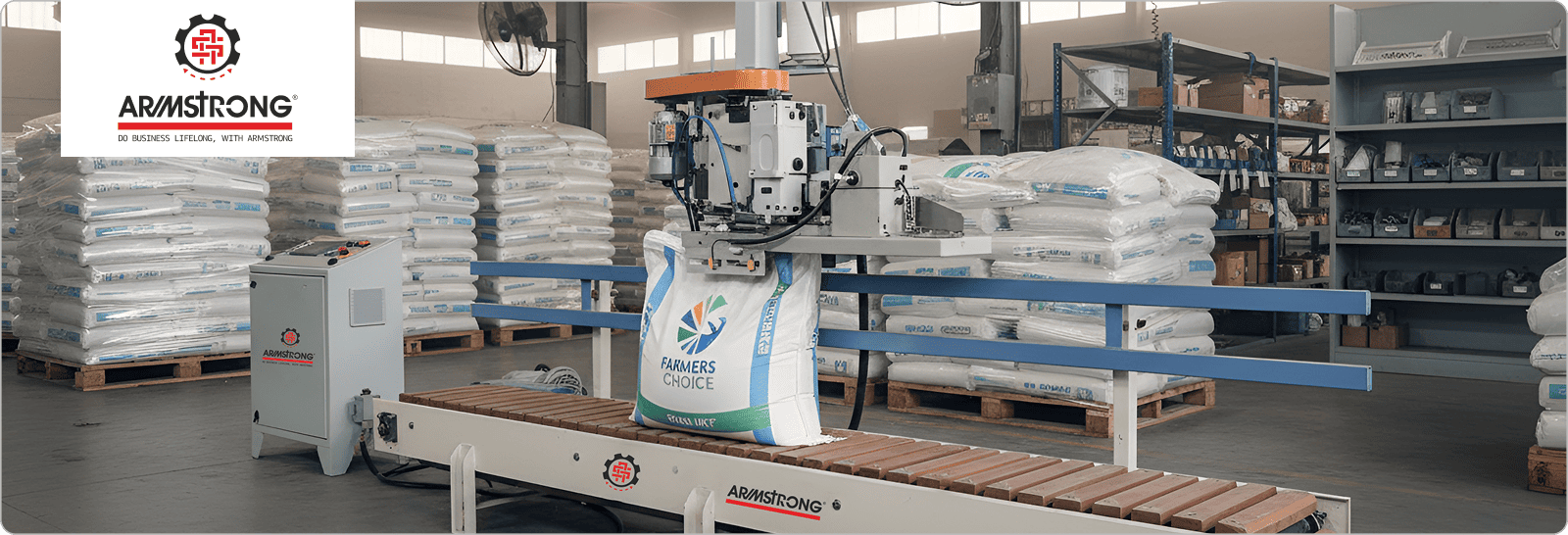
Starting a packaging business today is one of the easiest entry points into industrial manufacturing. From food grains and fertilizers to pet food and chemicals, nearly every sector depends on reliable packaging to protect products during transport and storage. The most important machines in this ecosystem are the Bag Closing Machines used to seal filled sacks before dispatch safely.
Unlike manual stitching that slows down production and creates inconsistencies, modern Bag Closer Sewing Machine solutions are fast and give uniform sealing with minimal operator effort. These machines stitch the open tops of bags with strong threads to stop leakage, contamination, and handling damage.
Across warehouses, export units, rice mills, cement plants, and agro-processing factories, businesses depend on Industrial Bag Sealing Machine technology to maintain packaging consistency and reduce losses. Whether you’re sealing woven polypropylene bags, multi-wall paper sacks, or jute bags, choosing the right machine will get you operational success from day one.
The final sealing step determines product safety in the real packaging environment. A filled bag that isn’t properly sealed can spill during loading, moisturisation during transport, or contamination during storage.
The Automatic Bag Closer Machine systems change packaging lines. Instead of depending on skilled manual operators, factories use machines that deliver repeatable, tight closures across thousands of bags in one shift.
In a fertilizer plant, for example, sealing 10,000 bags daily manually would require multiple operators and still lead to improper stitching. An Automatic Bag Closer Sewing Machine, the same output can be achieved faster with better consistency and lower labor dependency.
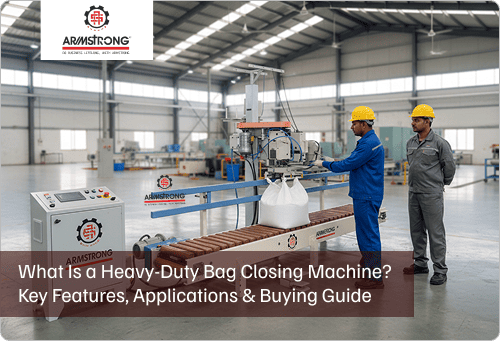
A Bag Closing Machines setup is a specialized stitching solution designed to close filled bags using durable threads. Unlike general sewing machines, these are engineered for thick, industrial materials such as woven PP, HDPE, kraft paper, and laminated sacks.
At its core, a Bag closer stitching machine performs three simple actions:
In rice mills, operators often carry portable bag closer machines to seal bags directly at filling points. On the other hand, automated plants integrate conveyor-mounted systems for continuous sealing.
Startups often underestimate how packaging affects the brand. A poorly sealed bag doesn’t just spill it also damages trust.
Investing in Heavy Duty Bag Closing Machines ensures:
Many exporters choose machines from a Heavy Duty Bag Closing Machine Manufacturer earlier to reduce rework and prevent customer complaints.
Especially for bulk commodities like grains or polymers in export scenarios, packaging integrity directly impacts buyer confidence. A broken seam during container unloading can lead to rejection.
1. Faster Packaging Cycles
Machines can seal hundreds of bags every hour, largely increasing output as compared to manual stitching.
2. Reduced Product Loss
Uniform stitching reduces powder leakage and spillage during handling.
3. Labor Efficiency
One operator with an Automatic Bag Closer Machine can handle workloads previously requiring multiple workers.
4. Professional Finish
Consistent stitches improve visual appeal, especially for retail packaging.
5. Multi-material Compatibility
A High-quality Bag Closer Sewing Machine works with paper, woven plastic, jute, and even laminated bags.
Selecting the right Bag Closer Sewing Machine is not just about budget. It also depends on how your packaging line actually operates. The right choice ensures smooth production, fewer breakdowns, and consistent sealing quality.
1. Bag Material Compatibility
Start by checking the type of bags you handle.
Choosing the right Bag Closing Machines for your material prevents early wear and tear and inconsistent stitching.
2. Production Volume
Your daily output plays a huge role in machine selection.
Matching machine capacity with output prevents difficulties and improves workflow efficiency.
3. Automation Level
Automation directly affects labor cost and sealing consistency.
An Automatic Bag Closer Sewing Machine is ideal for factories running continuous shifts where speed, uniform stitching, and minimal operator dependency are important.
Fully automatic models:
For growing businesses, automation gives long-term scalability.
One of the most common concerns for new packaging businesses is machine cost. However, when evaluated realistically, Bag Closing Machines often deliver faster returns than expected. Many manufacturers initially rely on manual stitching to save money. But hidden costs quickly add up. For instance, a grain processor sealing thousands of bags daily manually may face:
Over time, these inefficiencies directly reduce profitability.
Switching to a single and double needle automatic bag closing machine significantly improves operational economics. Automated systems can:
This is why many businesses upgrade to solutions from a reliable Heavy Duty Bag Closing Machine Manufacturer early in their growth journey.
In real-world scenarios, companies often recover their investment within 6–12 months through:
For scaling businesses, investing in the right High-quality Bag Closer Sewing Machine is not just a cost strategy but, it’s a profitability strategy.
Manual stitching may seem cheaper initially but, introduces variability. Stitch tension differs between operators, leading to inconsistent sealing.
Automated systems from a trusted manufacturer of Heavy Duty Bag Closing Machines provide:
In logistics hubs handling export shipments, automation ensures consistent sealing even during peak dispatch hours.
Industrial machines must perform well in extreme environments. Fortunately, modern Bag Closing Machine supplier networks make servicing easy.
Typical maintenance includes:
With proper care, machines can run for years with the least downtime.
Industrial packaging environments need to follow the universal safety standards. A high-quality Industrial Bag Sealing Machine includes:
For food and export industries, clean stitching and contamination-free sealing are critical for compliance.
When reliability matters, brand trust plays a huge role. This is where Armstrong stands out as a Heavy Duty Bag Closing Machine Manufacturer with decades of engineering expertise.
Armstrong machines are designed for:
Many global exporters rely on Armstrong because the machines are built for real factory conditions, not just showroom performance.
The packaging industry is evolving rapidly. Modern innovations include:
Future Automatic Bag Closer Machine designs will likely integrate IoT monitoring and predictive maintenance features.
One of the biggest concerns for buyers is long-term support. Armstrong takes care of this through their strong after-sales infrastructure.
Users benefit from:
This checks that production lines remain smooth even in demanding environments.

Starting a packaging business requires dependable equipment that ensures consistency, durability, and operational efficiency. Investing in the right Bag Closing Machines not only improves sealing quality but also strengthens brand credibility in competitive markets.
Whether you're launching a new facility or upgrading an existing line, choosing a High-quality Bag Closer Sewing Machine can hugely improve productivity and reduce risks.
With reliable automation, durable construction, and strong service backing, modern bag closing systems help businesses scale confidently in today’s quick packaging industry.
Explore more articles on innovation, engineering, and industry leadership.
December 7, 2024
September 8, 2025
October 15, 2025
November 25, 2025
November 26, 2025
December 29, 2025
January 27, 2026
February 23, 2026
 Previous