There was a time when jumbo bag manufacturing was treated as a straightforward production activity. Cut the fabric, stitch the panels, attach the loops, inspect the bags, and dispatch the order. But industrial packaging doesn’t work that way anymore.
These days, a single shipment that gets rejected by manufacturers ends up costing them a lot more than just the cost of the materials. Things like delayed shipments, inconsistencies in bag quality, problems with seams coming undone while being picked up, or products being damaged while in transit; all of these issues can hurt their reputation, can lead to lower customer retention, and can slow down long-term growth with their business. For industries that move things like cement, fertilizers, minerals, chemicals, food, or polymers, having dependable packaging is now a must.
That is exactly why manufacturers across the industrial packaging sector are shifting toward the Automatic FIBC bag-making machine.
The goal is not simply to “produce more bags.” To develop a faster manufacturing environment that lessens the amount of scrap produced, creates desired product consistently, and reduces reliance on variable manual actions. Modern technology in automated systems is revolutionizing the way that jumbo bags are produced for companies that want to grow their business without sacrificing consistency and timeliness in the production process.
An automatic FIBC bag-making machine is an automated heavyweight container production machine manufactured by industrial facilities. These "flexible intermediate bulk containers" are intended for use in industries requiring robust packaging and stable loads and are employed to store and ship bulk materials.
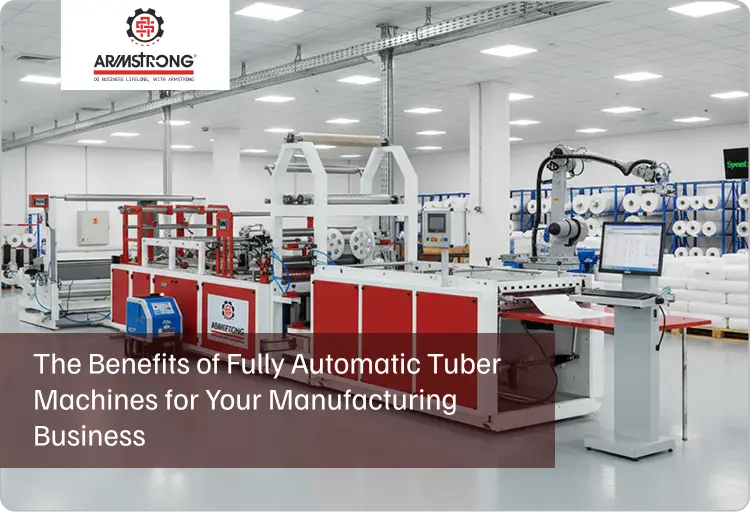
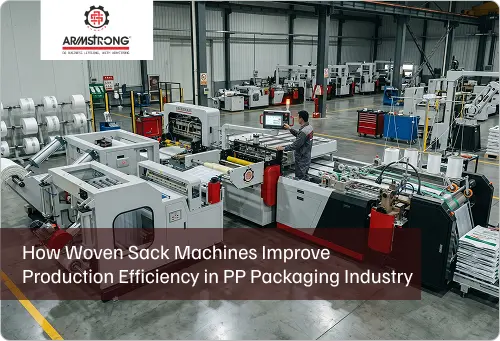
Unlike traditional setups where operators manually handle different stages of production, modern automated systems combine multiple operations into a synchronized production line. Fabric feeding, cutting, loop attachment, liner insertion, stitching, printing, and finishing can all be integrated into a single workflow.
This is where modern fibc bag production machine technology stands apart from older manufacturing methods.
Instead of relying heavily on manual accuracy, automation ensures consistency across every production cycle. That consistency matters because FIBC bags are expected to handle heavy industrial loads repeatedly without compromising safety or performance.
And as industrial demand continues to grow, manufacturers are increasingly looking for machines that can handle multiple bag formats without slowing down production efficiency.
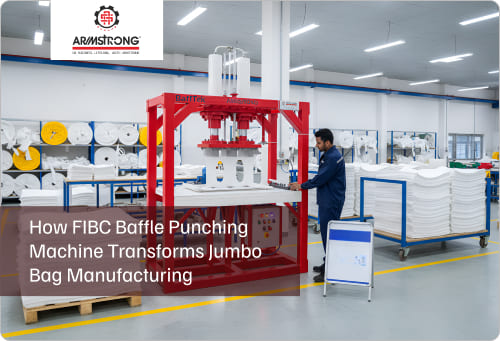
Read More: How FIBC Baffle Punching Machine Transforms Jumbo Bag Manufacturing
Most manufacturers who switch to automation don’t do it overnight. It usually starts with production pressure.
A business begins receiving larger orders. Delivery timelines become tighter. Operators need overtime shifts to complete dispatch schedules. Rejection rates slowly start increasing. Stitching quality becomes inconsistent between batches. Production managers spend more time fixing workflow problems than improving output.
This is where manual production starts becoming expensive in ways that are not immediately visible. In traditional jumbo bag manufacturing, too much depends on the operator's skill. A slight variation in cutting alignment or stitching tension may not look serious during production, but once the bags are filled and lifted, those inconsistencies become risky.
Manual production also slows down movement across the factory floor. Fabric handling, loop positioning, lifting, stitching, and inspection; every stage depends on manpower coordination.
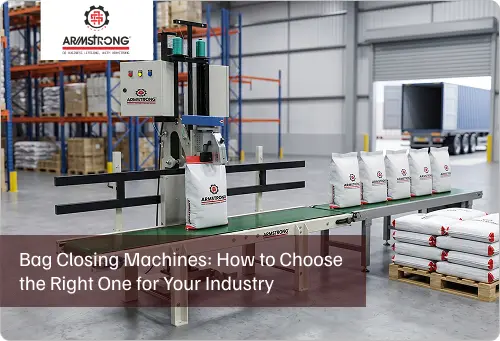
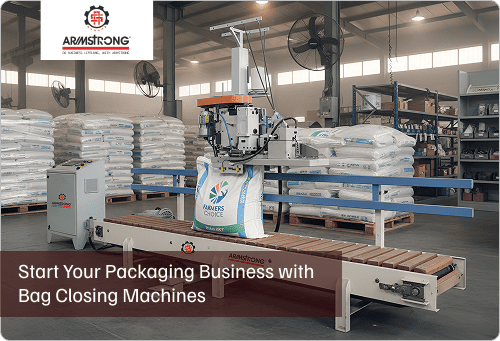
Automated industrial bag closing machines changes that production environment completely.
Instead of operators manually controlling every stage, the machine maintains synchronized movement across the workflow. Cutting becomes more accurate. Loop attachment remains consistent. Stitching quality improves. Material handling becomes smoother. And perhaps most importantly, production output becomes predictable.
For manufacturers supplying export markets or handling large industrial contracts, predictability is often more valuable than speed alone.
1. Higher Production Speed
Production speed is usually the first thing manufacturers notice after automation.
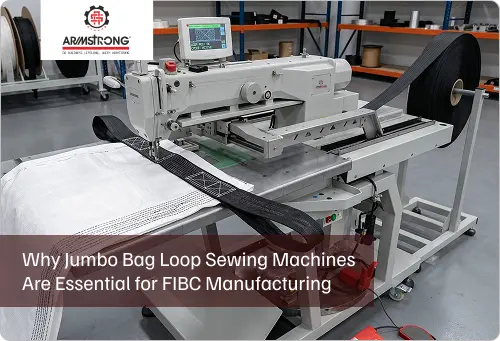
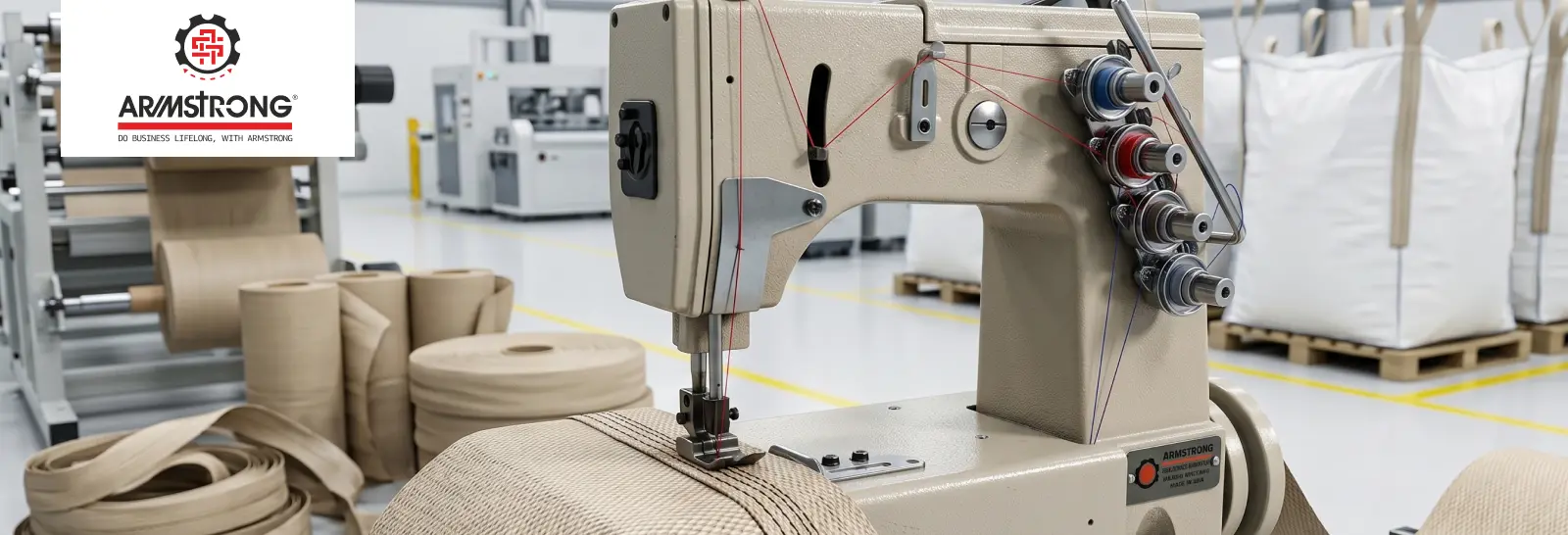
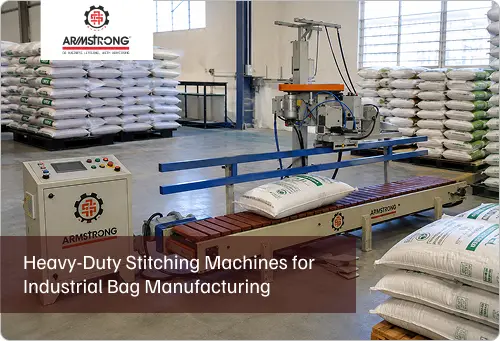
A modern Jumbo bag loop sewing machine can produce significantly higher output compared to conventional manual setups because multiple operations run simultaneously rather than independently. Fabric movement is synchronized, cutting cycles are automated, and stitching processes operate continuously with minimal interruptions.
But what actually improves productivity is not just speed — it is workflow continuity.
In many factories, production delays happen between operations rather than during the operation itself. Fabric waits for stitching. Stitched panels wait for inspection. Finished bags wait for handling. Automation reduces these idle gaps dramatically.
That creates a smoother manufacturing cycle where output becomes more stable shift after shift.
2. Consistent Bag Quality
Industrial buyers care deeply about consistency because bulk packaging failures can become extremely expensive.
A large bag with poor stitching or a weak loop attachment may look fine after you check it from the outside, but it can fail during loading and shipping. This is not acceptable when dealing with chemicals, concrete, minerals, or food.
Modern Automatic FIBC bag-making machine systems are designed to reduce those inconsistencies through precision-controlled operations.
Automated stitching systems maintain uniform seam quality. Servo-controlled cutting improves dimensional accuracy. Controlled loop positioning ensures better load distribution. The result is a bag that performs more reliably under industrial handling conditions.
And in large-scale manufacturing, consistency often matters more than occasional peak performance.
3. Reduced Labor Dependency
Labour dependency has quietly become one of the biggest operational concerns in manufacturing industries.
It is becoming increasingly difficult for companies involved with industrial stitching and jumbo bag operations to find skilled labor. This is particularly true for businesses operating on continuous cycles of production and also maintaining consistent production through multiple shifts, even if there is manpower available.
This is one of the strongest reasons industries are investing in Modern FIBC bag-making machines.
By automating processes, there will be less reliance on coordinating between workers when doing repetitive tasks in a production environment, which means that manufacturers can produce more product with fewer workers, while also providing better quality assurance throughout the production process.
This type of consistency will become particularly important during periods of labour shortages, when there are large increases in seasonal demand, or when companies need to increase production capacity very quickly.
4. Lower Rejection and Wastage
Material wastage rarely looks dramatic on a day-to-day basis. But over months of production, small inaccuracies create major losses.
A few millimeters of cutting variation, stitching defects, fabric damage during handling, or rejected loop attachments can significantly affect manufacturing cost in high-volume production environments.
A modern big bag making machine reduces these inefficiencies through process accuracy.
Fabric utilization improves because cutting systems maintain consistent dimensions. Controlled stitching reduces seam defects. Automated handling reduces unnecessary fabric stress and damage.
For manufacturers producing thousands of bags every week, even small improvements in wastage control create substantial long-term savings.
5. Improved Safety in Manufacturing
Heavy woven fabric rolls, industrial stitching systems, lifting operations, and high-speed production movement all create safety risks in manual manufacturing environments.
Automation improves workplace safety by reducing direct operator involvement in repetitive and physically demanding tasks.
Instead of manually moving heavy materials across production stages, automated systems help control fabric movement and reduce operator fatigue. That not only improves safety but also creates a more organized production workflow.
6. Better Stitching and Loop Strength
Loop strength is one of the most critical performance factors in FIBC bags.
If loop attachment or seam stitching fails under load, the entire bag becomes unsafe regardless of fabric quality. That is why industrial buyers pay close attention to reinforcement quality and lifting performance.
Advanced fibc bag production machine systems use precision sewing setups designed to maintain:
This improves load-bearing performance while also reducing rejection during quality inspections.
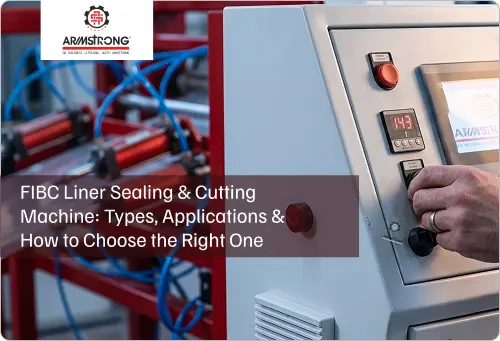
Learn More: FIBC Liner Sealing & Cutting Machine: Types, Applications & How to Choose the Right One
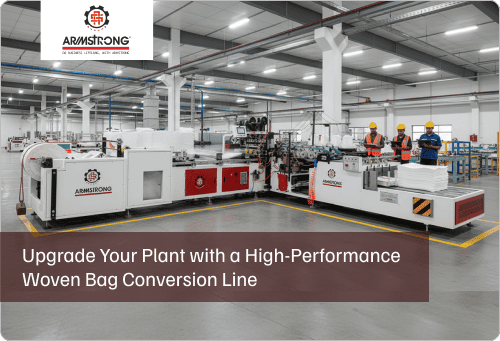
Modern jumbo bag production is no longer dependent on standalone operations. Most manufacturers now prefer integrated production systems that streamline workflow across the factory.
A complete automated production line may include:
Integrated automation reduces production interruptions because material movement becomes more synchronized throughout the manufacturing cycle.
That synchronization improves both speed and consistency.
Each industry has specific requirements when it comes to jumbo bag design; the manufacturers typically select the machinery that will provide them with the right production specs.
Some companies manufacture fertilizer, and other companies produce food-grade, chemical storage, and heavy-duty mining FIBCs. Each application demands slightly different production capabilities.
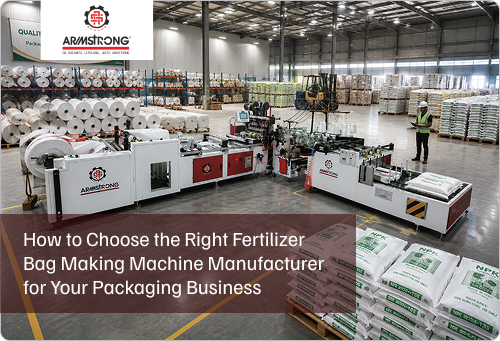
An experienced Manufacturer of Fibc Bag Making Machine generally helps businesses select machinery based on production volume, bag design requirements, and future scalability plans rather than simply recommending the fastest machine available.
1. Industries That Use FIBC Jumbo Bags: The demand for heavy-duty bulk bags continues growing because industries increasingly prefer lightweight packaging solutions capable of handling large material volumes efficiently.
2. Cement Industry: Cement manufacturers use jumbo bags for bulk transport where load stability and seam strength are extremely important during handling and stacking.
3. Agriculture Industry: FIBC bags are widely used for fertilizers, grains, seeds, and animal feed because they simplify storage and large-scale transportation.
4. Chemical Industry: The chemical sector relies heavily on industrial bulk bags for powders, compounds, polymers, and sensitive industrial materials.
5. Food Processing Industry: Food-grade jumbo bags are commonly used for sugar, flour, starch, pulses, and grain handling applications.
6. Mining & Mineral Industry: Mining operations require durable bags for various industrial applications capable of carrying high-density materials safely across transport systems.
Many businesses initially focus only on the purchase cost of machinery. But in industrial manufacturing, operational cost matters far more over time.
At the same time, businesses gain faster output, more stable quality, and stronger production scalability.
The return on investment becomes especially noticeable in factories running continuous production cycles, where even small improvements in efficiency create major long-term savings.
Manufacturers evaluating automation systems should look beyond basic production speed.
After-sales technical support is equally important because long-term machine reliability depends heavily on proper maintenance and operational guidance.
Even advanced machinery performs poorly without regular maintenance.
Routine lubrication, periodic inspection of stitching systems, cleaning of sensors, checking alignment systems, and monitoring blade wear can significantly improve production stability.
Preventive maintenance always costs less than unplanned downtime during active production schedules.
Even modern automated systems can face production issues when factory management becomes inconsistent.
Incorrect tension settings, poor raw material quality, skipped maintenance schedules, and operator handling errors can all affect production quality over time.
Most of these problems can be minimized through proper training, scheduled maintenance, stable workflow management, and regular machine inspections.
Working with an experienced manufacturer of Fibc Bag Making Machine also helps businesses receive better technical support when production challenges arise.
Armstrong designs advanced FIBC manufacturing systems focused on industrial reliability, production efficiency, and long-term operational performance. Our machines are engineered for manufacturers who require stable output, strong stitching quality, reduced downtime, and scalable production capability.
From cutting and sewing systems to liner insertion, testing, and finishing solutions, Armstrong provides complete automation support for modern jumbo bag manufacturing industries.
Our focus is not just on machine speed. It is on helping manufacturers create more stable, efficient, and future-ready production environments.

Over the past ten years, there has been a significant transformation in industrial packaging. Production volumes have increased, quality standards have become stricter, and manufacturers face a growing demand for cost reduction while ensuring their products remain reliable.
As a result, automation is becoming an integral part of the production process of jumbo bags.
A modern Automatic FIBC bag-making machine does far more than improve production speed. With the help of automation technology, manufacturers can establish a more robust quality control system, eliminate production inefficiency, enhance safety in the workplace, and increase production capacity at a higher level of confidence.
In addition to providing manufacturers with an increased level of productivity, automating production processes may also be essential for businesses focusing on long-term expansion opportunities in the industrial packaging industry. Automating production may prove to be critical in order for manufacturers to remain competitive in a continually changing manufacturing environment.
Explore more articles on innovation, engineering, and industry leadership.
December 7, 2024
September 8, 2025
October 15, 2025
November 25, 2025
November 26, 2025
December 29, 2025
January 27, 2026
February 23, 2026
February 24, 2026
August 10, 2026
August 20, 2026
August 26, 2026
September 16, 2026
September 19, 2026
 Previous