Packaging is usually seen as the last step of industrial operations, but it actually belongs to one of the most important steps. A bad seal on a bag can undo all previous steps by causing product loss, contamination, reputation damage, and/or wasted effort. For this reason, a bag closer machine is more than just an additional piece of equipment; it is a reliability tool.
Every bag must be sealed uniformly, securely, and quickly, regardless of what product is in the bag (powdered substances, grains, chemicals, or construction products). Manual sewing cannot match the demands of modern production. A bag closing machine provides speed, consistency, and durability.
Over time, the industrial bag closing machine changed from basic tools to highly automated systems that are now fully integrated into complete packaging lines. As well, selecting an industrial bag closing machine today is not only about the act of sealing bags; it is about optimizing your entire packaging workflow.
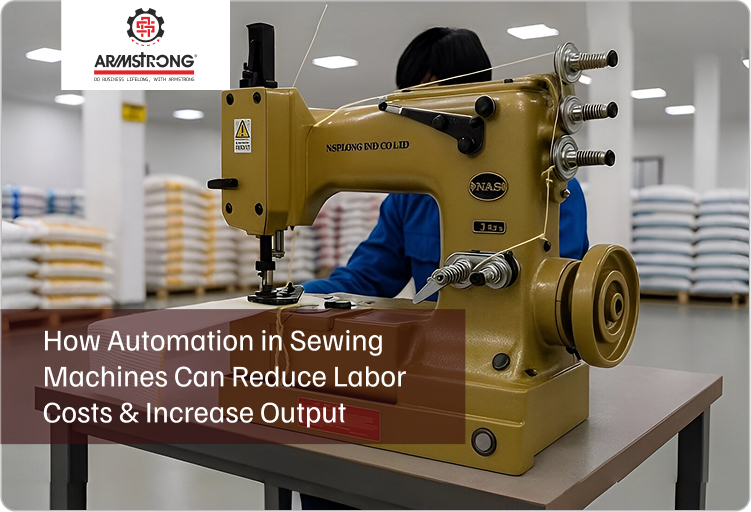
A bag closer machine stitches filled bags with a continuous thread mechanism, generally a chain stitch. Stitching gives flexibility and strength, especially for heavy-duty and ventilated packaging materials.
These machines are used for:
A good bag stitching machine keeps every closure uniform, strong, and stress-resistant.
In extreme environments, a small error in sealing can lead to huge losses. A heavy-duty bag closer machine checks:
It makes packaging a smooth and efficient process.
Food-grade packaging needs both precision and cleanliness. Bags must be sealed tightly to prevent leakage and material damage.
A bag closer machine for rice bags is typically used with PP woven sacks and must deliver:
Portable machines are used for flexibility, while larger plants depend on conveyor systems.
Machine strength really matters. Cement bags are heavy, abrasive, and often handled roughly across logistics chains.
A bag closer machine for cement bags must be:
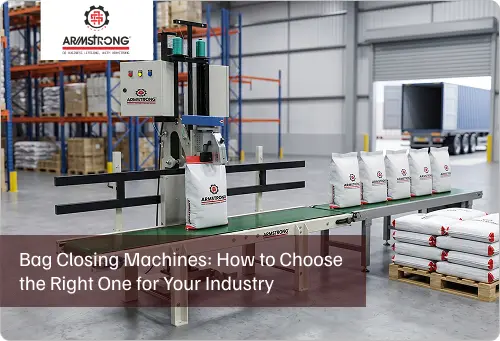
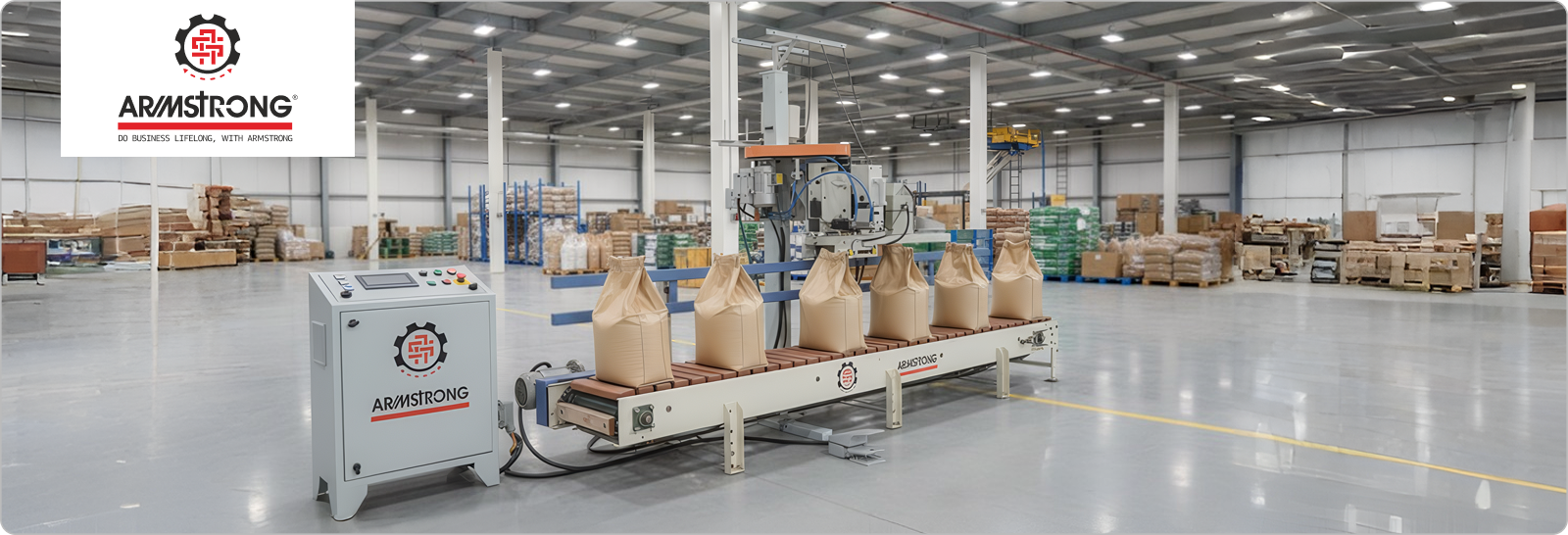
Industrial bag closing machines are paired with automated filling and conveying systems for high-speed production.
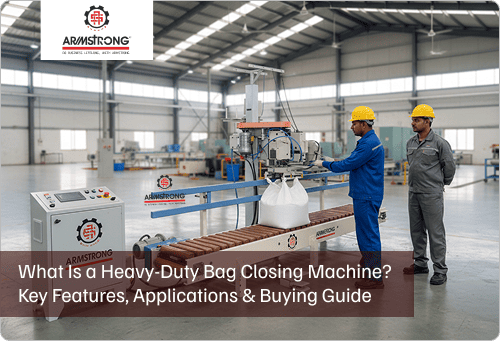
See Also: What Is a Heavy-Duty Bag Closing Machine? Key Features, Applications & Buying Guide
Fine materials introduce a different challenge, leakage and contamination. Even a slight gap in stitching can lead to product loss.
A bag closer machine for sugar bags ensures:
This is especially important in food-grade industries where packaging quality reflects directly on the brand.
A portable bag closer machine is ideal for operations that require flexibility. It’s light, easy to carry, and can be used across different locations in a facility.
Where it fits best:
It gives reliable performance for moderate workloads.
Semi-automatic machines offer high efficiency. The operator guides the bag, while the machine stitches.
Why businesses choose it:
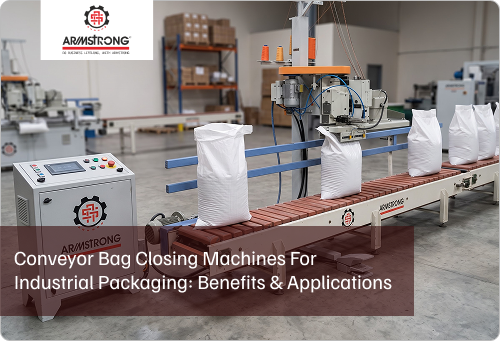
A fully automatic bag closing machine is designed for high-output environments. It works seamlessly with conveyor systems and filling lines.
Key advantages:
For large-scale industries, this is often the most efficient solution.
Bags are either placed manually or fed through conveyors. Proper alignment is important for smooth stitching.
The machine forms a chain stitch using a needle and a looper. This type of stitch is strong and flexible, allowing the bag to handle pressure without tearing.
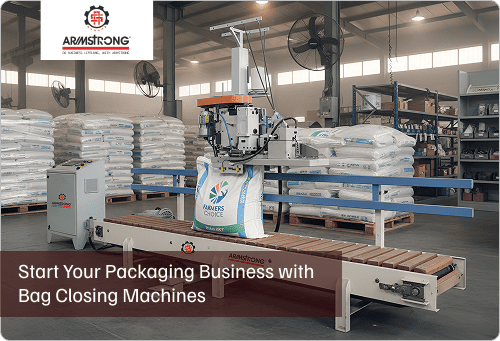
See Also: Start Your Packaging Business with Bag Closing Machines
Once the stitching is complete, the thread is cut automatically, and the bag is stacked or dispatched.
This entire process happens in seconds, making a high-speed bag closer machine important for modern production lines.
Speed directly affects output. A high-speed bag closer machine makes sure you can meet production targets without delays.
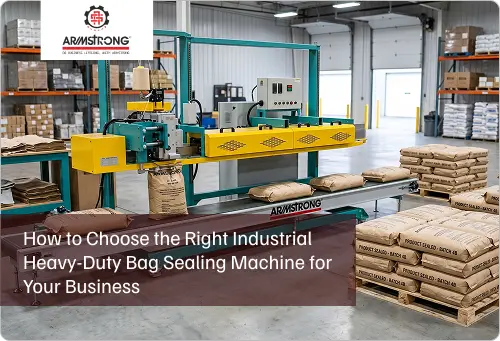
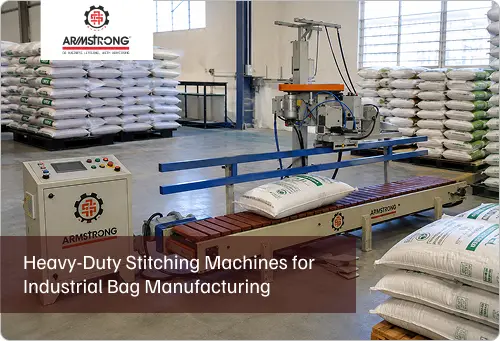
A heavy-duty bag stitching machine is designed to operate continuously under demanding conditions without frequent breakdowns.
Uniform stitching reduces product loss and improves packaging consistency, which is especially important for branding and logistics.
Modern machines are designed with user-friendly controls, reducing training time and operator dependency.
Efficient design minimizes downtime and reduces maintenance costs over time.
Instead of focusing on fixed pricing, it’s more useful to understand what drives the cost of a bag closer machine.
Key factors include:
A well-built machine may require a higher initial investment but delivers better long-term value through reliability and efficiency.
Faster sealing means smoother operations and reduced bottlenecks.
Automation reduces the need for manual stitching, saving both time and cost.
A bag closer sewing machine ensures that every bag is securely closed, minimizing product loss.
Consistent speed leads to increased daily output and better resource utilization.
When selecting a machine, look beyond basic features.
Focus on:
These factors directly affect performance and long-term usability.
The right choice depends on how frequently and how intensively the machine will be used.
Ask yourself:
Answering these questions helps you invest in a machine that supports both current and future needs.
These machines are essential across industries such as:
Their versatility makes them a standard part of modern packaging systems.
Consistent maintenance ensures long-term reliability and performance.
The industry is moving toward smarter, more integrated systems. Future-ready automatic bag closing machines are expected to include:
These advancements are focused on improving efficiency while reducing operational complexity.

In addition to its function as a sealing device, a bag closure machine also contributes to greater efficiency in your packaging operations, better product protection from damage, and improved dependability of your operational processes. If you select an appropriate machine for your production processes, it will help increase efficiencies, reduce the amount of material wasted, and ultimately help you achieve improved long-term productivity. Selecting the proper bag closing machine will provide long-term benefits in both performance and consistency when upgrading an existing bagging system or designing a new one.
Explore more articles on innovation, engineering, and industry leadership.
December 7, 2024
September 8, 2025
October 15, 2025
November 25, 2025
November 26, 2025
December 29, 2025
January 27, 2026
February 23, 2026
February 24, 2026
August 10, 2026
August 20, 2026
August 26, 2026
September 16, 2026
September 19, 2026
 Previous