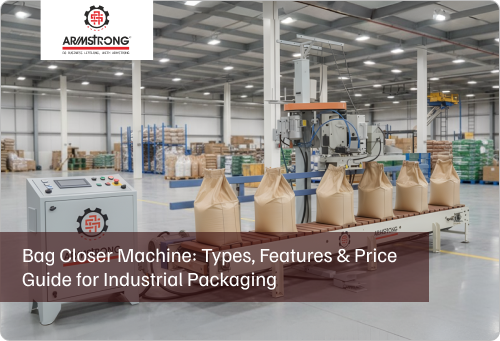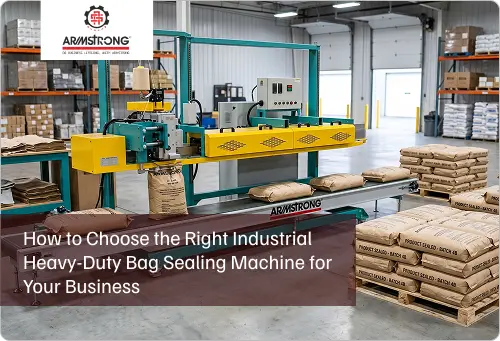
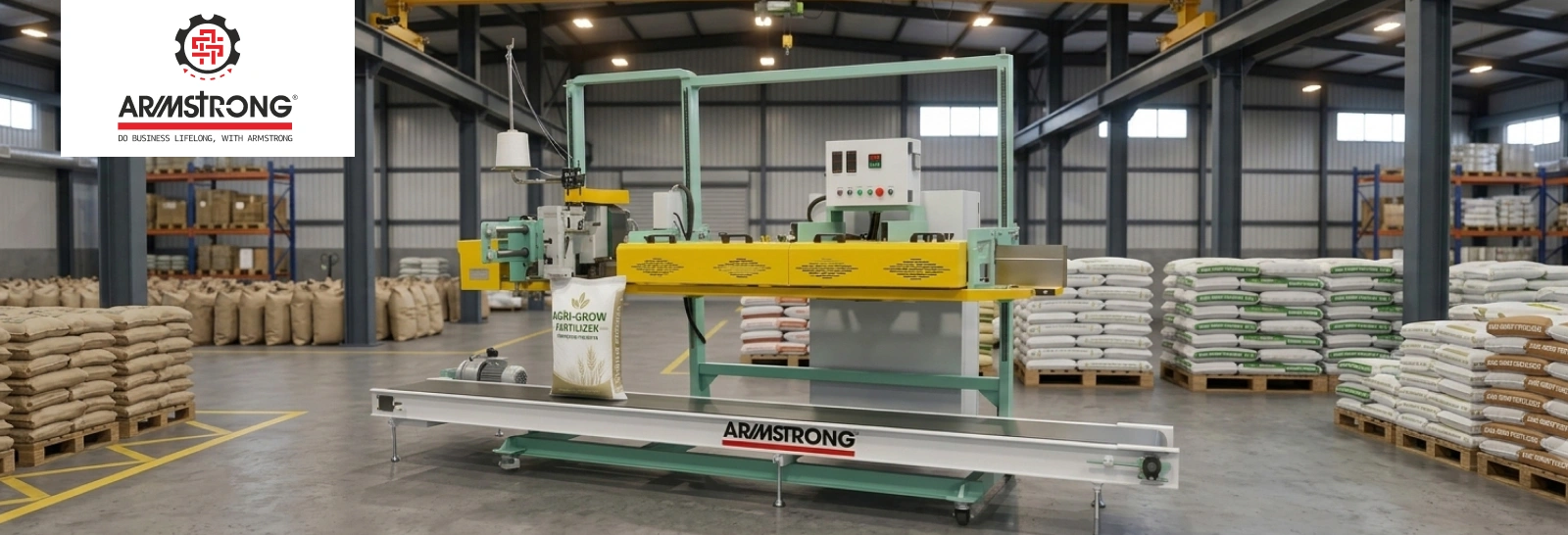
For large-volume operations, the end product on a bag, how it’s closed significantly impact product protection, ease of handling, and speed of production. Fortunately for manufacturers looking for even faster, more consistent closures at increased production volumes, there’s a machine that does just that. An automatic sealing machine simplifies ensuring robust closures, even for hard-to-seal heavy-duty bags, such as those for fertilizers, grain, chemicals, animal feed, food products, and many industrial commodities.
However, selecting a high-volume automatic system isn't a case of choosing the machine with the highest cycle count; bag materials, product content, sealing type, and line setup dictate the correct bagging system selection. In this guide bag sealing equipment manufacturers offer insight into how these machines perform, what materials can be sealed with them, the anatomy of any machine, a strategy for dealing with a faulty seal and aspects to consider before buying.
An automatic bag sealing machine automatically closes filled bags with minimal involvement from the operator. The closure is completed either by sealing technology or by using a stitching technique, depending on the bag construction and how it’s intended to be used. Plastic Packaging Bags, Heat Sealing Plastic bags form secure seals where two heat-sealable materials touch when sufficient heat is applied.
Armstrong’s Bag Sealing Machine makes your plastic packaging bags “hot-and-done,” producing tight, attractive seals that perform every time for the containment of all packaged granular and smaller products.
In a High-Volume Facility. The operation of the automation ensures a perfectly consistent seal process can occur without operator-influenced variations; the seals that result maintain their structural and presentation integrity within a higher-output working environment.
Heavy-duty bags undergo significantly rougher handling than light consumer packaging products are expected to go through. For a bag with grain, animal feed, chemicals, fertilizer, or a similar bulky material, that bag might be filled, carried from filling stations, stacked, loaded, moved by forklift or by other means, and unloaded many times throughout the process of reaching the ultimate consumer.
Not only does poor quality and weak closure potentially result in spilling, product degradation due to moisture, contamination, and outright loss of product, but it also means a lot of manual effort is required, and that process of hand sealing can cause a logjam if hundreds or thousands of bags need sealing on any given shift.
By automatically closing your bags, an automatic sealer machine will make that operation consistent, reduce tedious repetitive work for personnel, and assure consistency in sealing processes throughout the working day. When arranged in an efficient packaging line and tied in with conveyors and equipment, the heat sealers for packaging can help keep your bag packaging flow on the move.
The bag material is one of the first things to consider when selecting an automated sealing system. Different materials respond differently to heat and stitching.
PP and PE woven bags are widely used for fertilizers, grains, animal feed, chemicals, and other bulk products. Depending on their construction and closure requirements, these bags may be stitched or sealed using an appropriate heat-sealing system.
These are bag constructions that consist of more than one material layer and are not sealable under standard conditions but require defined environmental and operational conditions. The operating parameters such as temperature, pressure, and seal time must be carefully adapted to the respective laminate structure.
Paper bags, as well as jute bags, cotton bags, and multilayer bags, are typically stitched rather than heat sealed with a conventional heat sealer. Which machine to select depends on bag style, content, and desired sealing strength.
While machine designs vary, an automated heavy-duty industrial sealing setup generally consists of several coordinated elements.
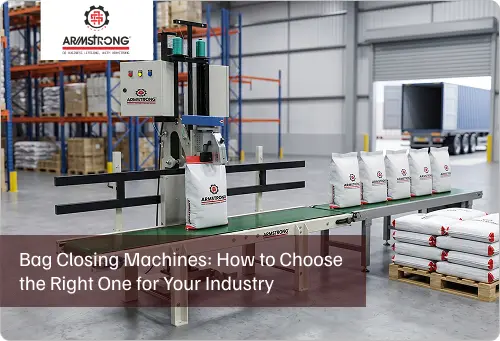
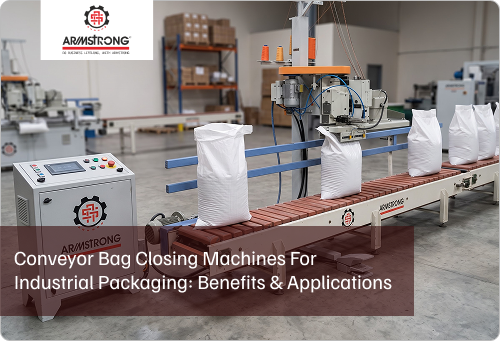
The feeding mechanism brings the filled bag into the sealing area at a controlled rate. In an integrated packaging line, a conveyor can continuously transfer bags from filling to final closure.
Correct positioning is essential for a clean closure. The bag mouth must remain properly aligned as it enters the sealing section.
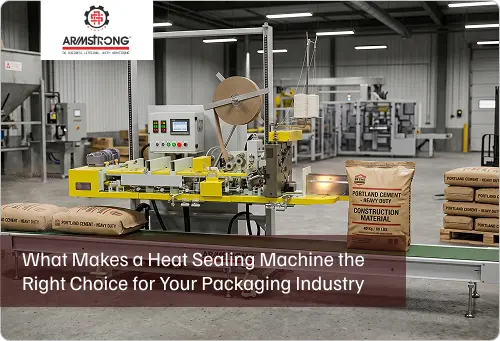
This section is the actual operation. On various machines, the closure can be formed by heat, pressure, sewing, etc., depending on the particular application and application technology involved.
For systems that use heat, you need to set the right temperatures and pressures that correspond with the bags material being sealed. You will find you can make no-seal, weak seals, and damage the material if they do not.
The control interface allows operators to adjust and monitor relevant operating parameters. Consistent settings are particularly important when production runs continue for several hours.
Once the bag has been sealed, it moves away from the sealing area for inspection, stacking, secondary handling, or dispatch.
While the details vary from one machine to another, the general process of turning a string or file into bytes is an easy one.
The filled bag is brought to the sealing station, where its open mouth is positioned correctly. Accurate alignment at this stage helps prevent uneven or incomplete closures.
The bag moves through the sealing area at a controlled speed. Consistent movement is important because the sealing result depends on factors such as contact time, pressure, and material characteristics.
The machine applies the selected closure method. In heat sealing, controlled heat softens compatible thermoplastic layers so they bond together under pressure. In stitching-based systems, needles and thread mechanically join the bag layers.
Where heat sealing is used, the newly formed seal needs sufficient time to stabilize before the bag undergoes heavy handling. This helps maintain the integrity of the closure.
The finished bag exits the machine and continues to the next stage of the packaging or dispatch process.
This repeatable sequence is the key advantage of an auto bag sealing machine. Automation is not simply about moving faster; it is about performing the same operation consistently across a large production run.
An industrial bag sealing machine can be used wherever products are packed in bulk bags that require secure closure.
Common applications include:
These applications have one thing in common: the bags need dependable closure while being handled repeatedly throughout the supply chain.
There is no universal specification that works for every heavy-duty bag. Instead, manufacturers should evaluate the machine against their actual packaging requirements.
| Specification | What to Consider |
|---|---|
| Bag material | PP/PE woven, plastic, laminated or compatible structures |
| Closure method | Heat sealing or stitching |
| Bag dimensions | Minimum and maximum bag size |
| Product | Powder, granules, food, fertilizer, chemicals, etc. |
| Production volume | Required bags per hour or shift |
| Feeding method | Manual, conveyor-fed or integrated |
| Control system | Ease of setting and monitoring parameters |
| Seal quality | Strength, consistency and appearance |
| Maintenance | Access to wear parts and service points |
| Integration | Compatibility with existing packaging equipment |
For example, Armstrong's Bag Sealing Machine is designed for plastic packaging bags and emphasizes quick operation, consistent sealing strength, and firm, durable seals for packaging applications.
An automated process reduces variations caused by operator technique and helps produce a more uniform closure from bag to bag.
An automatic bag sealer machine can maintain a repeatable workflow, making it useful for operations handling high numbers of filled bags.
Instead of repeatedly performing the same sealing operation, operators can focus on monitoring production, material flow, and quality.
A properly selected closure helps reduce the risk of leakage and protects packaged materials during storage and transportation.
Automated sealing equipment can be combined with conveyors and other packaging equipment to create a smoother end-of-line process.
Even an automated system can produce poor results when the machine settings, bag material, or operating conditions are not properly matched.
Possible causes: Incorrect temperature, pressure, sealing time, contamination, or unsuitable material.
Solution: Check the operating parameters, clean the sealing area, and confirm that the bag material is compatible with the machine.
Possible causes: Poor bag alignment, inconsistent feeding, or worn components.
Solution: Check the bag positioning system and feeding speed, then inspect components that affect sealing consistency.
Possible cause: Excessive heat or contact time.
Solution: Adjust the relevant sealing parameters and test the result on the actual production material before returning to full production.
Possible causes: Material buildup, inadequate maintenance, worn components, or incorrect operation.
Solution: Follow a preventive maintenance schedule and investigate unusual machine behavior before it develops into a major production problem.
Regular maintenance is particularly important when an automatic sealer machine operates continuously.
Small maintenance can stop production breakdowns and also keep machine performance consistent.
Choosing an automatic sealing machine involves a lot more than the initial purchase price; bag material, application environment, method of closure, and hours of operation, plus availability of technical support, should all contribute to a product's future worth.
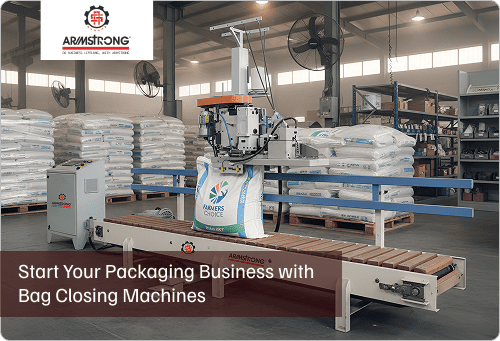
Armstrong provides automated industrial bag-sealing and bag-closing machinery for applications involving aggressive packaging environments. Their Bag Automatic Sealing Machine has been designed to heat-seal plastic packaging bags quickly and reliably; their extensive range of bag-closing machines also encompasses specific machinery for specific industrial bags, with different requirements for bag closure.
With this method, businesses involved in rugged packaging processes are given the option of choosing a closure machine based on actual bag structure and application rather than applying a standard procedure to all packaging application demands.

An automated bag sealing machine plays a significant role in the fast pace, high volume packaging line. Its value to this type of line is that it will achieve more than just simply sealing the bags rapidly. It is a device capable of repeating a specific and identical motion that may serve to have better consistent sealing than is achievable manually, relieve human repetitive motions and may offer an increased throughput.
The right equipment depends entirely on the circumstances, including the bag material and contents, output requirements, type of closure, and the extent to which the process is automated. A careful analysis of these requirements is essential when selecting the appropriate industrial bag sealing machine from Armstrong.
This has particular relevance to any continuous or in-line operation. High levels of packaging integrity can be maintained for producers of heavy-duty packaging products when a stable sealing technology is applied.
Explore more articles on innovation, engineering, and industry leadership.
December 7, 2024
September 8, 2025
October 15, 2025
November 25, 2025
November 26, 2025
December 29, 2025
January 27, 2026
February 23, 2026
February 24, 2026
August 10, 2026
August 20, 2026
September 16, 2026
September 19, 2026
 Previous