Woven Sack Bag Cutting & Stitching Machines: How to Reduce Production Costs

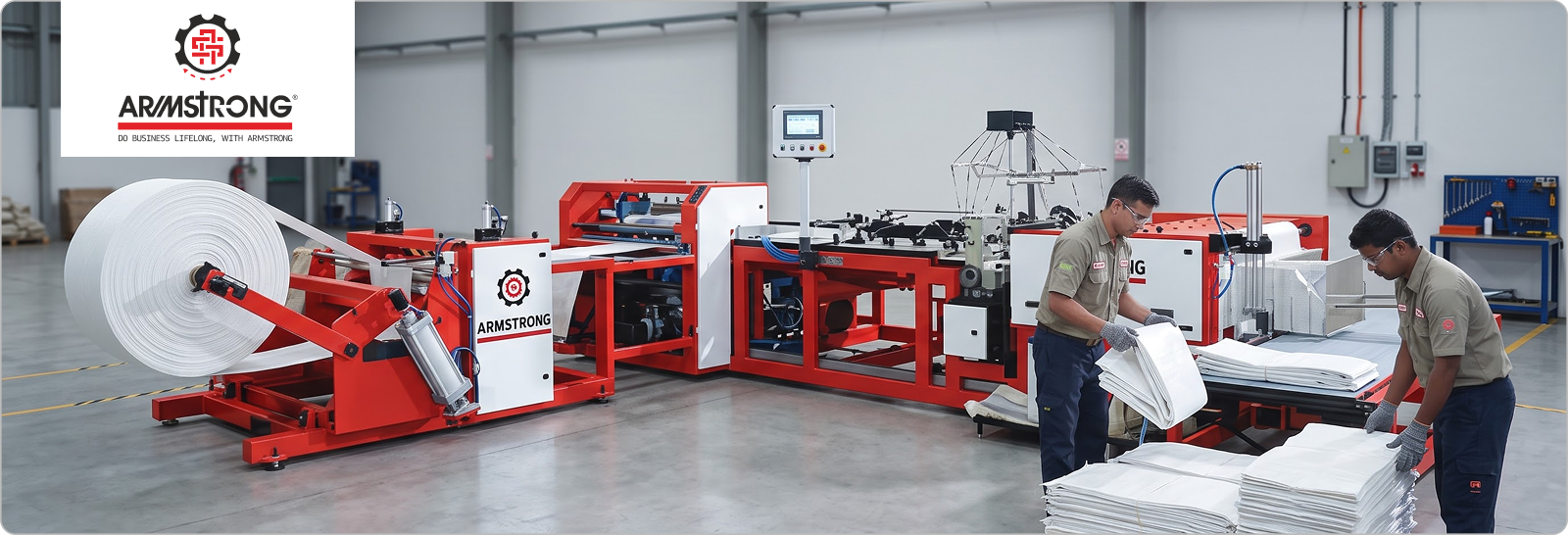
For woven sack manufacturers, managing the cost of production isn't just about lowering raw material costs. Accuracy of cut, tacking, labor needed, waste, time in maintenance, and speed of production can all impact the cost of each finished bag. A woven sack cutting machine can improve cutting consistency, while a bcs machine can combine cutting, folding, stitching, and stacking within a connected production process. BCS Machine is designed for PP, HDPE, and BOPP woven bags and is built for continuous industrial production.
"A small saving on every bag can become a significant saving when production runs into thousands of bags every day."
Woven sack bag cutting and sewing machines are used to produce finished sacks from woven fabric in a predefined process. In various arrangements, these include feeding, length measurement, cutting, folding, sewing, and stacking of the fabric.
Standard production processes may demand that the operator transport fabric and partially completed bags between different workstations. Each transition can add to the labor involved and result in dimensional inaccuracies, misalignment, or delays.
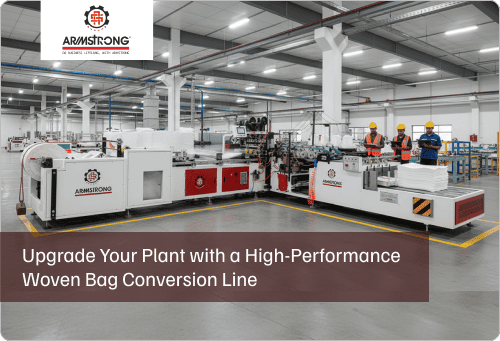
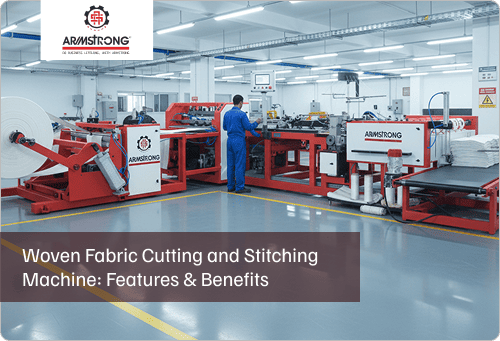
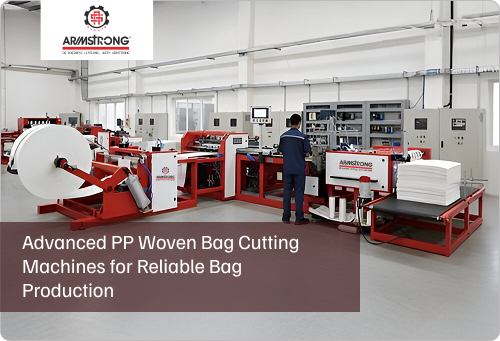
An integrated woven bag cutting and stitching machine brings important conversion stages together. Armstrong's BCS Machine Servo controlled cutting, auto-folding, heavy-duty stitching, PLC control, auto stacking The BCS machine is also compatible with BOPP, PP, and HDPE woven bags for applications such as agriculture, fertilizer, industrial, food grain, and cement. An automatic sealing machine for heavy duty bags can also be considered where secure and consistent bag closure is required for demanding applications.
This approach can help manufacturers improve production flow while reducing the amount of repetitive manual handling involved in bag conversion.
Production costs are often affected by several small inefficiencies rather than one major expense. Cutting and stitching automation can address some of these recurring losses.
Cutting accuracy has a direct effect on fabric utilization. Inconsistent bag lengths or poorly controlled cutting can result in excess material and rejected pieces. Servo-controlled cutting helps maintain repeatable bag dimensions and reduces unnecessary fabric loss.
Uniform cutting and improved material utilization are among the key benefits of the BCS Machine.
For high-volume manufacturing, even a small reduction in material wastage per bag can make a noticeable difference over an extended production cycle.
A production line with one operator for each of cutting, folding, stitching, and stacking can incur high repetitive labor costs. Performing multiple operations in a single machine would eliminate the need to move between them.
BCS Machine is specified with automatic folding, stitching, and stacking and requires just a single operator.
Inconsistent bag dimensions can lead to rework, rejected bags, and customer complaints. Automated feeding, cutting, and stitching help maintain more consistent output across long production runs.
Time in production is relevant if bags are produced according to specifications. Continuous operation under consistent cutting and stitching conditions will enhance the quality of bags produced per shift.
"The real measure of productivity is not how fast a machine runs, but how much acceptable product it produces consistently."
The machine's specifications affect the accuracy of the cut, the rate of production, the amount of labour involved, and the overall speed of operation. When specifying machines, manufacturers should look at features that enable consistent output and reduction of waste and production costs.
Servo-controlled cutting provides proper control over bag length and repetition. This is important while manufacturing large batches where variations can increase material consumption or rejection.
Combining folding and stitching reduces manual movement. BCS Machine connects automatic folding with heavy-duty stitching for continuous woven bag conversion.
PLC controls allow operators to manage important production parameters with a centralized interface. This can make adjustments easier while supporting repeatable production settings.
Once bags are stitched, manual stacking becomes repetitive. Automatic stacking organizes finished bags and can reduce post-production handling requirements.
The machine has to match the fabrics. BCS Machine is designed for PP, HDPE, and BOPP woven bags, while the company’s wider woven sack machinery range supports different requirements.
To ensure you don't make a costly mistake, know how your factory is currently performing and where costs or waste are being incurred. Don't buy a machine based on how much it costs, but on your production results. Manufacturers can measure these KPIs before and after automation:
Modern cutting and stitching technology connects processes that used to be handled separately. This creates a more controlled production flow and can reduce unnecessary handling.
The main benefits include:
woven sack machine range includes BCS machines, high-speed cutting and sewing conversion lines, liner insertion systems, gusseting machines, lamination equipment, and printing solutions.
Manufacturers looking at the wider production process can also refer to PP Woven Bag Making Machines to understand how different stages of woven bag conversion can be integrated.
The right machine is not the fastest or cheapest one because the production may not require a faster or more cost-effective machine. Production requirements may be about the number of bags per year, size of bags, type of fabric, level of automation, maintenance, and other considerations.
Consider Production Volume: Examine daily production levels, maximum demand levels and future volume growth. The machine should operate within the typical capacity needed for the application and not be oversized.
Check Bag Dimensions: Compare the desired bag width and length to the machine range. According to BCS Machine specifications, bag widths are 12-32 inches and bag length are 17-55 inches.
Evaluate Fabric Type: PP, HDPE, and BOPP woven fabrics could show different processing behaviors and properties. Make sure the machine of choice is compatible with the materials, bag construction, and thicknesses manufactured.
Assess Automation Requirements: Some manufacturers may have requirements and needs that are different from those of a high-volume plant operating three shifts. Too much automation can complicate matters where a reasonable amount of repetition is beneficial.
Consider Service and Maintenance: Spare parts, technical support, operator training, preventative maintenance, and installation support can impact the long-term operating costs. Unprevented downtime from poor maintenance or unavailability of support wipe out the planned savings.
For manufacturers comparing available solutions, BCS machine provides an example of an integrated cutting, folding, stitching, and stacking system.
ROI should be calculated using the entire production process rather than the machine's purchase price alone. A practical calculation can consider:
Annual Savings = Labour Savings + Material Savings + Rework Savings + Additional Contribution from Higher Output − Additional Operating Costs
The time to recover investment can then be calculated from the initial investment minus the annual net saving. That's why you should not compare the pp woven bag cutting machine price in isolation. Two machines can have similar purchase prices but differ in output, labor, packaging material input, maintenance cost, and service life.
The wrong equipment selection and ignoring certain production considerations may escalate operating costs rather than reduce them. Here's why you should never make these selection and production mistakes that can impact the use of materials, labor, equipment, and output.
The Armstrong BCS Machine integrates the cutting, folding, sewing, and stacking processes. The Armstrong machine has the advantages of servo cutting, PLC automation, a professional stitching machine, and automatic stacking of PP, HDPE, and BOPP woven bags.
In addition to Armstrong's Woven Sack Machines range, covering slitting, sewing, gusseting, laminating, printing, liner-insertion, and other woven sack conversion processes, operators can review single machine production alongside production line requirements.
For manufacturers comparing an automatic woven sack cutting and stitching machine, selection should be based on production volume, bag specifications, fabric type, automation level, maintenance requirements, and expected operating costs.
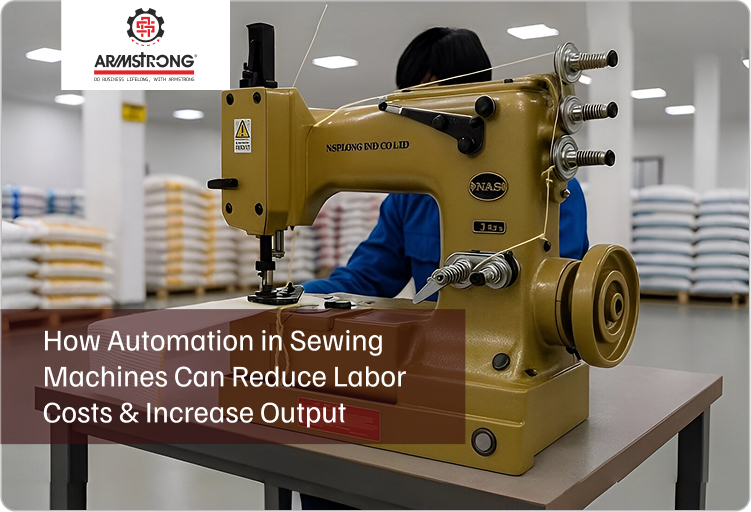
The company also offers Industrial Bag sewing machines for industrial stitching requirements, giving manufacturers access to equipment across different stages of bag production and closing.

Lowering the cost of woven sacks can involve looking at the entire conversion process. You are tracking material use, labour, output, quality, rework, downtime, and maintenance to the finished bag. An integrated cutting and stitching system can bring several of these factors under better control. A woven bag sewing machine can support consistent stitching, while a pp woven bag stitching machine can form part of a more automated conversion workflow. Armstrong offers machinery designed to support efficient woven bag production and conversion processes.
Explore more articles on innovation, engineering, and industry leadership.
December 7, 2024
September 8, 2025
October 15, 2025
November 25, 2025
November 26, 2025
December 29, 2025
January 27, 2026
February 23, 2026
February 24, 2026
August 10, 2026
August 20, 2026
August 26, 2026
September 19, 2026
 Previous