
When a bag splits open, people often blame the filling machine. But in most cases, the problem is the seam. A fertilizer bag can be the exact right weight and still burst on the truck because someone closed the top in a hurry. A bag stitching machine stops this from happening. It sews the mouth of each filled bag with thread, closing every bag the same way.
Doing this by hand works for some time. But after a few hundred bags, the stitching starts to get worse. The right machine for you depends on three things: your bag, your product, and how many bags you pack in a day. Let’s go through them one by one.
Closing is the last step of packing, so it gets the least attention. But think about what happens to the bag next. It goes onto a pile in the warehouse, then onto a truck, and then off again at the other end. Every time, someone picks it up by the top. If the seam is weak, that is where it opens. You lose the product, and you get a phone call from an angry buyer.
Hand stitching is okay for a small batch. The trouble starts when the numbers go up. By evening, your workers are tired, and their seams show it. A bag stitching machine doesn’t get tired. The needle, the thread and the speed stay the same from the first bag to the last one.
Before you start looking at machines, note down these three things:
Of course, a machine does things quicker. However, just ask a plant manager after the machine is bought, and most of the time you’ll hear the same answer: there are no longer any piles of bags at the end point of the process. And when there’s only one person who has to fold, hold, and straighten every bag by hand, the bags begin to queue right from the moment when filling starts. So when you compare industrial bag stitching machines, watch how well each one keeps the bags moving. The speed printed in the brochure is only half the story.
Less Manual Work
Your worker just guides the bag, and the machine sews. Nobody’s hands get sore from pushing a needle through thick jute all day.
Same Seam on Every Bag
You set the needle and thread tension once in the morning. After that, the first bag and the five hundredth bag get the same seam, so fewer bags come back from dispatch.
Smoother Movement on the Line
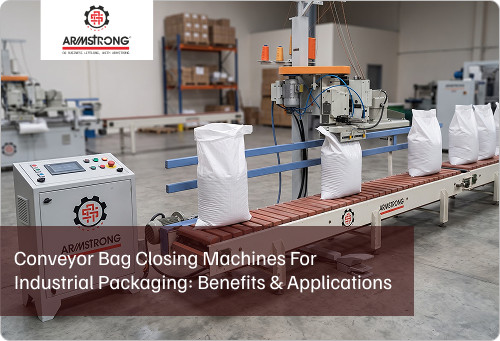
On a conveyor, the bag stays standing as it moves through the stitching head. An auto cutter cuts the thread, and the line keeps running.
Easier to Count Output
Machine closing makes counting simple. You can see bags per hour and stitching faults, and by lunch you will know if the shift will hit its target.
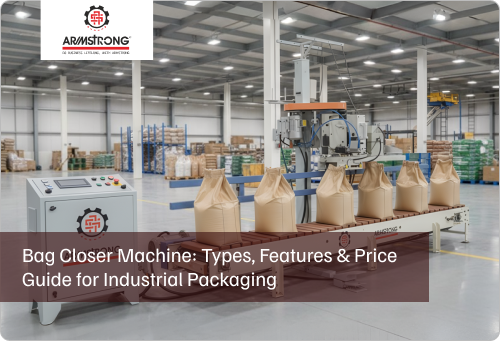
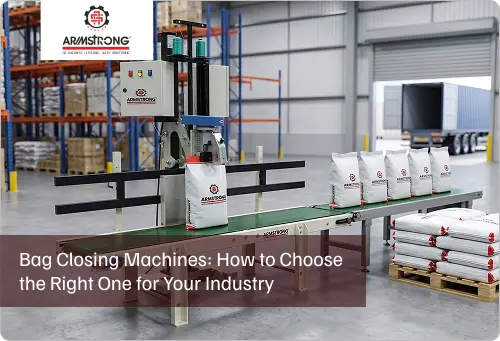
If you only have two or three filling points, a portable bag stitching machine is usually enough. Your worker carries it to the bag or hangs it over the filling spout. When hand-held closing starts holding up your output, it is time for an automatic bag stitching machine on a conveyor. Many plants pair it with industrial bag closing machines, so a filled bag goes from the filler to the stitcher without anyone lifting it.
Every bag type behaves a little differently under the needle. Weave, thickness, coating, number of plies: each one changes the setup. Here’s a rough guide:
| Bag Type | Commonly Packed | What to Check |
|---|---|---|
| Jute | Rice, wheat, pulses | Rough texture; needle and thread size |
| PP woven | Fertilizer, sugar, feed | Fold the mouth so cut tapes don’t fray |
| HDPE woven | Chemicals, polymers, salt | A needle that won’t cut the tapes |
| Laminated woven | Branded rice, pet food | Tension, so the lamination doesn’t crack |
| Paper sacks | Cement, flour, powders | Number of plies; tape over needle holes |
| Cotton | Flour, specialty goods | Fabric weight and even tension |
Jute bags: Jute is thick and uneven. A thin needle bends or snaps on it, so a jute bag stitching machine is usually set up with a heavier needle and thicker thread. Go for steady feeding over raw speed.
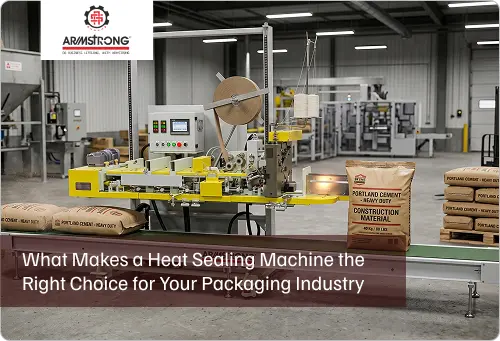
PP woven bags: With a pp woven bag stitching machine, even feed, and the right stitch length do most of the work. If your bag is laminated, make sure the machine is set up for that extra layer.
Cement sacks: Dust everywhere, rough handling, heavy loads. A cement bag stitching machine has to live with all of it, which is why many plants add crepe tape or filler cord over the seam, depending on the bag, to stop powder seeping out.
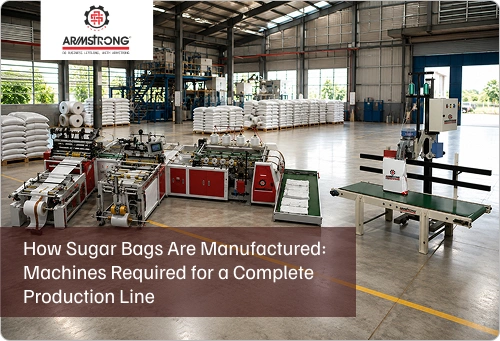
One thing new buyers often forget: if you make your own bags, the bottom and sides were sewn earlier on a bag sewing machine. It helps to set both machines for the same fabric, so the seam is equally strong at the top and the bottom.
In most packing halls, “stitching” and “sewing” mean the same thing: closing the bag with a needle and thread. The real choice is between thread and heat.
| Stitching / Sewing | Heat Sealing | |
|---|---|---|
| How it closes | Needle and thread | Heat, sometimes with pressure |
| Works on | PP and HDPE woven, jute, paper, cotton | Films and heat-sealable laminates |
| What to set | Needle, thread, stitch type | Temperature and sealing time |
| Typical use | Bulk industrial sacks | Sealed packs for food or chemicals |
Plain woven and jute bags don’t take a heat seal well, so stitching is still how most bulk sacks get closed. Before shortlisting any closing equipment, be clear on two things: what your bag is made of, and what kind of closure your buyer expects.
Two machines can look identical in a catalogue and behave completely differently once they’re running on your floor. Here’s what we’d check on any industrial bag stitching machine before signing the order.
A single-needle chain stitch is the normal choice for filled bags. Double-needle heads make a different seam that some heavier bags need. Our guide to the heavy-duty bag closer stitching machine explains when you need one.
Smooth thread flow means even stitches. An auto cutter saves a few seconds per bag, which adds up fast over a shift.
If the bag moves sideways, the seam goes crooked too. Good feed dogs, or a conveyor that matches the stitching head, keep the bag straight.
Portable machines work well when you close bags at different places in the plant. A fixed or conveyor machine suits one line with a steady flow of bags. Plants packing heavy products often choose a heavy duty bag stitching machine for this.
New operators pick up simple controls quickly. And if the needle, looper, and oiling points are easy to reach, daily cleaning actually gets done.
The speed printed on a brochure is stitches per minute. That isn’t bags per hour, and it certainly isn’t good bags per hour.
Real output drops for normal reasons. Big bags take longer to set in place. Threads break, and needles become blunt. A new operator needs about a week to settle in. So track these numbers instead:
A quick example. Turning up the head speed does nothing if bags go in crooked and half the seams need redoing. A slightly slower automatic bag stitching machine that gets each bag right the first time gives you more usable output.
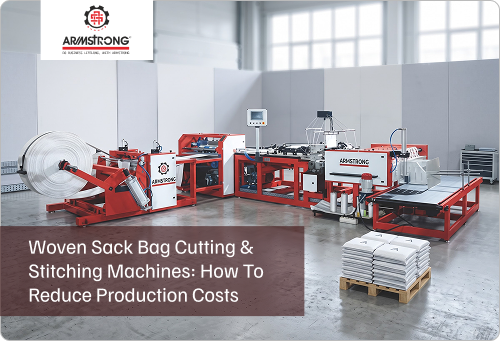
Converting your own fabric into bags as well? Then the speed upstream counts too. Our guide to Woven Sack Bag Cutting & Stitching Machines shows how cutting and stitching fit together.
You will find stitching machines almost anywhere goods are packed in bags:
Smaller units with a handful of filling points tend to start with a portable bag stitching machine. Bigger plants often move to fixed machines or conveyors, and those packing heavy products often choose a heavy duty bag stitching machine.
A bag stitching machine will stay on your floor for many years, so choose carefully. If you buy a machine that is too small, it won’t be enough when your orders grow. If you buy one that is too big, you pay for features nobody uses.
Buying Checklist
Don’t let price decide on its own. A cheap machine that stops every hour costs more in the long run, and the most expensive machine is not always the right one either.
Armstrong has made machinery for the woven packaging industry for more than 40 years, and its machines operate in over 70 countries. The range goes from portable closers to fully automatic stitching systems, plus bag-making sewing machines for PP, HDPE, BOPP, and paper bags.
Each machine is built and tested in-house before it’s dispatched, and spare parts come from the same source, so you’re not chasing three suppliers when a looper wears out. Armstrong is a member of FIBCA, PMMAI, and the Indian Institute of Packaging. Our team can assist you in selecting the ideal arrangement, whether you require a one-woven sack stitching machine or a complete closing station.

Nobody gets excited about buying a bag stitching machine. Still, this machine decides if your bags reach the customer in one piece. Start with your bag. Then count how many bags you close each day. Speed and price matter less than you think. Good bags and good service matter more. Send your bag details to Armstrong, and our team will suggest a machine that fits your line.
Explore more articles on innovation, engineering, and industry leadership.
December 7, 2024
September 8, 2025
October 15, 2025
November 25, 2025
November 26, 2025
December 29, 2025
January 27, 2026
February 23, 2026
February 24, 2026
August 10, 2026
August 20, 2026
August 26, 2026
September 16, 2026
September 19, 2026
 Previous