Conveyor Bag Closing Machines for Industrial Packaging: Benefits & Applications

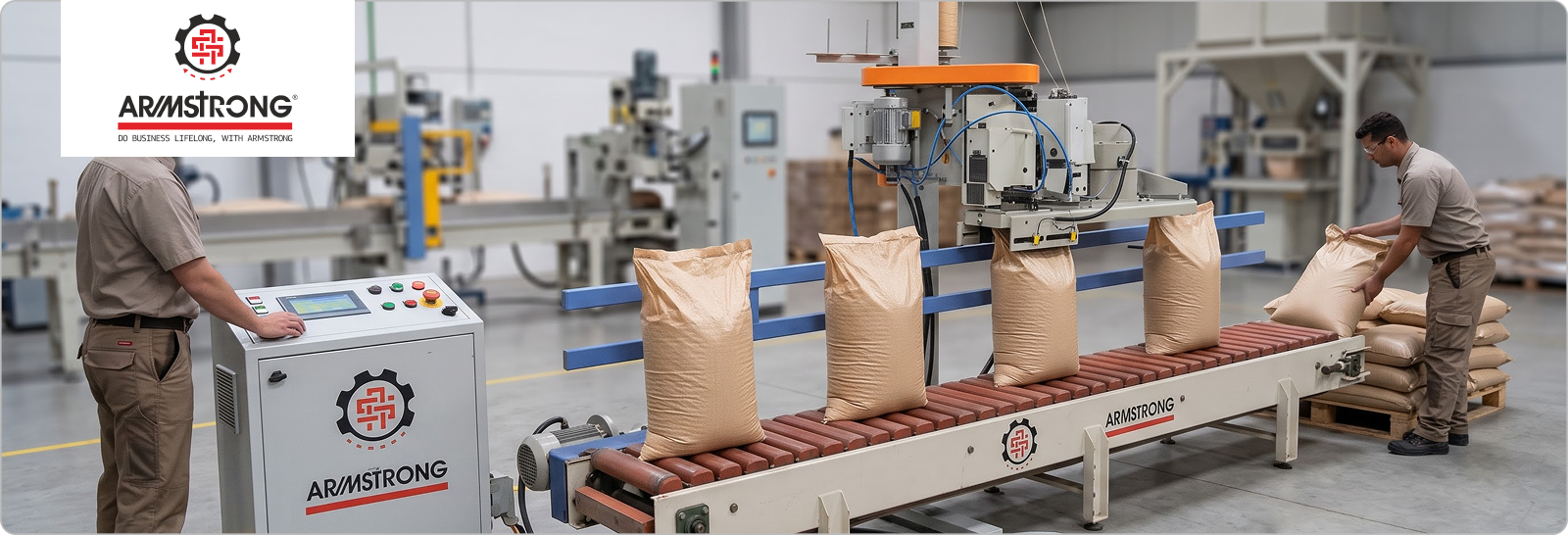
More than just a trusty stitching head, industrial packaging lines require a controlled passage from the actual full bag processing to final closure. Our industrial bag closing machines can be integrated with conveyors to transfer the filled bags easily in position while ensuring uniform stitching and reducing the amount of manual handling. Conveyor-integrated bag closing systems for intense packaging processes, featuring industrial bag closing machines for PP woven, paper, jute, and other fabric bags. When well-matched to the material, type of closure, and production speed, our conveyor-based systems deliver more efficient workflow and simple repetitive operations.
"A reliable packaging line is built around consistency at every stage, not speed at only one stage."
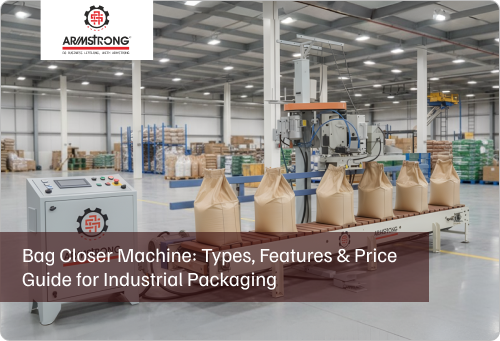
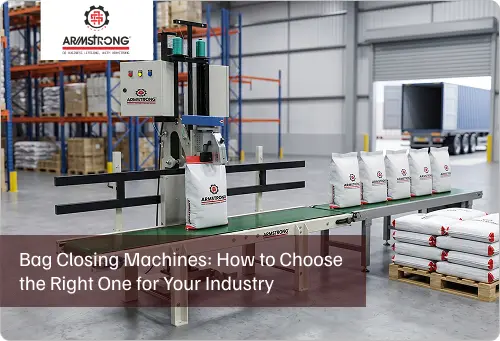
This machine combines a bag-closing or bag-stitching mechanism with a conveyor system that provides support for carrying and aligning the filled bags. Rather than the operator having to physically pick up each bag and place it under the sewing head, the conveyor helps control the flow of the bags during the bag closing process.
This feature is particularly advantageous when bags are filled on a continuous basis and then need to be closed for subsequent handling, stacking, etc. prior to further distribution.
Bag Turning & Tilting Conveyor is designed for handling filled bags and may include turning, tilting, weighing, metal detection, or related stitching processes. Specifically describes the system as compatible with a conveyor belt stitching machine or bag stitching machine with conveyor or bag closer machine with conveyor setup.
The exact configuration depends on the packaging line. A manufacturer may require simple conveyor-assisted stitching or a more integrated system involving weighing, inspection, orientation, and metal detection.
Industrial bagging typically involves filled bags that are heavy, repetitive and over-bagged, often in large, varied quantities. Moving each bag singly from operation to operation may add to the labor requirement, leading to variable feeding to the stitching station.
A conveyor forms a 'flow path,' and when combined with an appropriate bag infeed stitching head, it can enable the bags to be advanced at a controlled rate and without excessive manual handling.
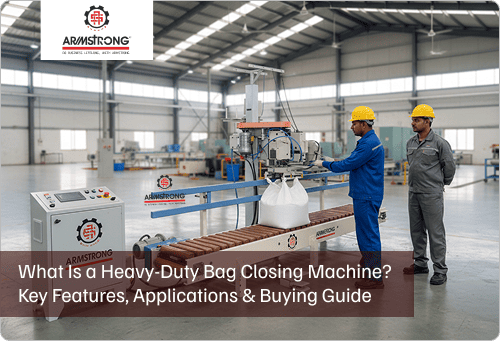
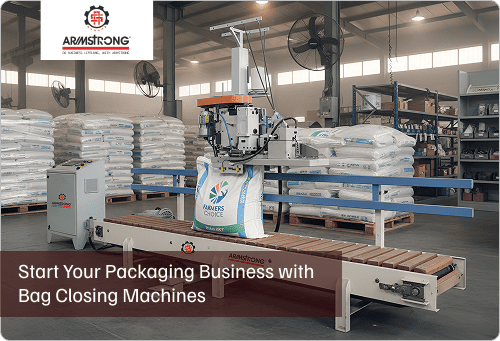
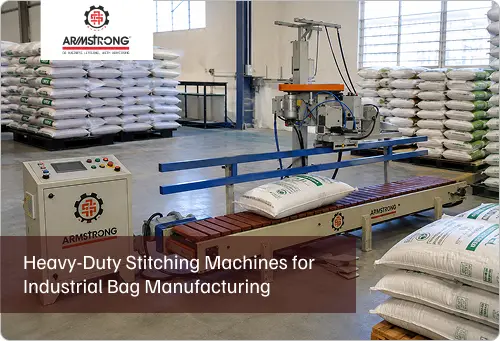
Heavy-Duty Bag Closer Stitching Machine (model AS 800 BC-ATC) incorporates a sophisticated bag infeed device, an adjustable pedestal column, a simple control panel, and a wooden slat conveyor; it is suitable for continuous industrial bag-closing. It can be used as a single/double-needle and two/four-thread device.
For applications when the bag position needs to be manipulated prior to stitching, weighing, quality control, or discharge, the bag turning and tilting conveyor can be used.
Conveyor Machines extend beyond the last stitch. Conveyor bag closing solutions can also help make other steps in the packaging process more efficient when they are used to move bags to the closed position.
1. Reduced Manual Handling: Conveyors decrease the frequency and necessity for operators to lift, transport, and place filled bags. This is important when a high volume of bags is generated or when bags hold heavy materials.
2. Consistent Bag Feeding: The controlled conveyor path leads to uniform movement into the stitch area. This can make the closing run smoother and lessen the disruptions that can occur from poor manual placement.
3. Improved Production Flow: If the bag filling, conveying, closing, inspection, and discharge lines are properly linked, fewer manual transfers can move from each station. This makes the production line more efficient.
4. Better Operator Efficiency: Operators can spend more of their time on the machine by monitoring the machine, inspecting the closure and the product output, managing the production parameters, investigating issues, and so on.
5. Suitable for Continuous Operations: Most industrial packaging plants run for many hours. Equipment that's made to run constantly can be a great choice for keeping performance steady over lengthier runs. Heavy-Duty Bag Closer Stitching Machine is up to industrial packing demands.
6. Easier Integration with Inspection: These systems can be fitted with other processes such as inline weighing or metal detection. Bag Turning & Tilting Conveyor integrates weighing and bag handling and can be linked with stitching systems.
There are many types of packaging machines for various kinds of packaging processes. It is vital to choose a packaging machine that has the right type of closing mechanism, automated facility, and the right conveyor configuration.
A heavy duty bag closing machine is intended for industrial applications where bags must withstand handling, transportation, and repeated movement after filling. AS 800 BC-ATC offers single/double-needle and two/four-thread options with automatic threading and crepe tape cutting capability.
Configurations can be appropriate for use with fertilizer, chemicals, plastics, minerals, powders and other industrial materials.
The combination of a bag closing machine with a conveyor connects the stitching process with controlled bag transportation. They are often used on packages that move directly from filling and handling to the closing process.
Bag Turning & Tilting Conveyor can work with a conveyor belt stitching machine or a bag closer machine with conveyor for bag orientation before stitching and other inspection procedures.
The woven bag closing machine is used for closing woven PP or other woven bag material with a stitched closure. Bag closing line of machinery has woven bag closing equipment that can be utilized on PP/PE woven bags as well as paper, jute, cotton and numerous other packaging materials.
Conveyor bag closing systems can be employed wherever there is a need for a reliable method of closing filled bags that are part of a chain. They are ideal for high volumes where consistency and flow are essential. Choosing the best bag closing machines for industry can help manufacturers maintain consistent bag closure and efficient production flow.
Grain, seed, flour, animal feed, and agricultural and food items are typically packaged in woven sacks or paper bags. With conveyor-assisted closing, you can keep a steady product flow. This can help reduce manual handling and maintain a consistent closing process during continuous packaging operations.
Fertilizer bags must be properly closed, because they will be moved often in storage and shipping. Applications for the Heavy-Duty Bag Closer Stitching Machine are listed by Fertilizer & Agrochemicals. A conveyor-assisted system can support efficient bag movement from filling to closing and subsequent handling stages.
Industrial powders and chemical products can require controlled packaging processes. Conveyor systems can help integrate closing with inspection and other quality-control stages. This setup can support smoother material flow while reducing unnecessary handling of filled bags.
Continuous bag flow and steady stitch help with heavy-volume packaging of polymers, mineral products, powders, and granules. According to Armstrong, heavy-duty bag closers are used for plastics & polymers, minerals & mining, and specialty powders & granules.
Continuous bag flow and steady stitch help with heavy-volume packaging of polymers, mineral products, powders, and granules. Heavy-duty bag closers are used for plastics & polymers, minerals & mining, and specialty powders & granules.
While the primary considerations in selecting an automated bag-closing system are the production rate, bag size and contents, available operator time and how integrated the system needs to be, this can vary. Armstrong also offers a variety of portable bag-closers.
| Factor | Automatic Conveyor System | Semi-Automatic Conveyor System |
|---|---|---|
| Manual intervention | Lower | Higher |
| Bag movement | More automated | Requires greater operator involvement |
| Production consistency | High when properly configured | More dependent on operator handling |
| Suitable production volume | High-volume operations | Low-to-medium or flexible operations |
| Integration potential | Higher | Moderate |
| Initial investment | Generally higher | Generally lower |
| Flexibility | Best for defined workflows | Useful where manual adjustments are frequent |
The proper equipment is less a matter of speed or the ultimate in automation than it is of matching equipment and design to an actual packaging operation. Bags, weight, closure, volume, conveyor scheme, space, and future capacities need to be considered.
Manufacturers can also explore bag closing machines for packaging businesses when evaluating equipment according to business scale and packaging requirements.
Armstrong provides industrial bag-closing and conveyor solutions for different packaging environments. As a conveyor bag closing machine manufacturer, the company's bag-closing category of solutions includes portable, heavy-duty, pedestal and conveyor-supported systems for bag-closure applications with various bag materials.
The AS 800 BC-ATC Heavy-Duty Bag Closer Stitching Machine pairs the company's heavy-duty stitching system with an in-feed device, an adjustable pedestal, a control panel and wooden slat conveyor; the combination gives the customer a choice of single- or double-needle, two- or four-thread configurations.
The company's conveyor category includes systems that are suitable for bag flow, orientation, weighing, metal detection and stitching. For a dedicated stitching solution, Our bag closer stitching machine provide a heavy-duty configuration for continuous industrial packaging applications.
"The most effective packaging equipment is the equipment that fits the entire production flow."

Conveyor bag closing systems provide increased continuity by integrating regulated conveyance of bags with standard stitching or closing. They can help to eliminate touch points, streamline operation, facilitate repetitive production, and simplify integration of closing with inspection, weighing, and other downstream process steps. Manufacturers of woven sacks, paper bags, fertilizers, chemicals, agricultural products, polymers, minerals and other bulk materials should seek a dependable closing process that integrates seamlessly with the rest of the packaging line.
Maintenance depends on the machine configuration and operating conditions. Regular cleaning, lubrication where applicable, inspection of stitching components, conveyor components, sensors, and other moving parts should follow the manufacturer's maintenance recommendations. Preventive servicing can help reduce unexpected downtime
Cost can vary according to the stitching configuration, automation level, conveyor design, bag material, production capacity, additional functions, and integration requirements. Systems that include weighing, metal detection, turning, or other automated functions may have different investment requirements from basic conveyor-assisted closing equipment.
Explore more articles on innovation, engineering, and industry leadership.
December 7, 2024
September 8, 2025
October 15, 2025
November 25, 2025
November 26, 2025
December 29, 2025
January 27, 2026
February 23, 2026
February 24, 2026
August 10, 2026
August 20, 2026
August 26, 2026
September 16, 2026
September 19, 2026
 Previous