What Makes a Heat Sealing Machine the Right Choice for Your Packaging Industry

Manufacturers face many difficulties in filling bags, especially in ensuring that the bag remains intact after it leaves the manufacturer's facility. Once the bag has been filled, the manufacturer must have the assurance that the integrity of the bag has not been compromised while loading and unloading, storing, shipping, and handling, and that the bag will not allow contaminating elements like moisture or dust to enter.
Manufacturing plants produce thousands of filled bags each day, and if any percentage of those bags is compromised, it can lead to several thousand dollars worth of ruined and/or unsellable products due to the cost of producing and handling the product, all because of integrity problems with the bag.
This is why many industries have moved beyond simple stitching and adopted the heat-sealing machine as part of their packaging process
Heat sealing technology applies to many different industries because of one simple fact: it allows manufacturers to have more confidence that their products arrive at their intended destinations in the same condition they were created.
A heat sealing machine bonds thermoplastics or plastic-coated bags on an industrial packaging line by applying both heat and force to create a lasting seal that prevents any leakage while protecting from environmental factors.
In some industrial cases, heat sealing may be used alongside stitching instead of replacing it altogether. For example, Kraft paper bags typically have an inner polyethylene liner; the liner is first bonded by heat prior to the bag being stitched for additional strength.
Heavy-duty poly bags are not as resourceful as the lower-grade bags because the material is designed to be sealed and can be completely sealed by heat without being stitched together.
The versatility of heat sealers enables their use in many forms of packaging and within a variety of industries.
Compact sealing units through complete packaging line systems make up the current state-of-the-art technology for creating modern packaging. An automatic heat sealing machine is capable of being connected directly with the filling, conveying, and bag closing systems. This connection enables manufacturers to increase their packaging speeds and improve the consistency of their seal quality.
Modern industrial packaging demands are light years ahead of what they were ten years ago.
The length of the trip for products is longer than ever, the amount of time they're stored in warehouses before being shipped out is at an all-time high, and customers expect their product's packaging to be in mint condition upon receipt, regardless of the way it was shipped. That means, when it comes to protecting the product, manufacturers can't just rely on basic closures.
Take, for example, animal feed. Feed is typically stored in warehouses for very long periods of time prior to being sent out. When exposed to moisture, the quality of the product and the amount of time that it will be able to stay fresh will be diminished. The same can be said for flour and milk powder manufacturers who need to use packaging that reduces the risk of contamination and helps maintain freshness.
When a liner is properly sealed, there is an added layer protecting the product from outside contaminants. It will take significantly longer for dust, moisture, and other contaminants to get into the package. Also, because the likelihood of product leakage during shipping and handling is greatly reduced, manufacturers are less likely to have product loss.
In addition to protecting the product, manufacturers enjoy many other benefits from having packaging that is better sealed. Fewer customer complaints and loss of product result in increased confidence in the supply chain for manufacturers.
In a very competitive environment, these are advantages that cannot be overlooked.
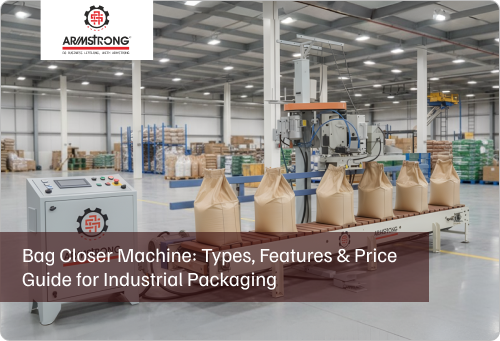
Read More: Bag Closer Machine: Types, Features & Price Guide for Industrial Packaging
Not all packaging operations require the same type of sealing solution. The right machine depends on the bag structure, production volume, and the level of protection required.
1. Vertical Heat Sealing Machine
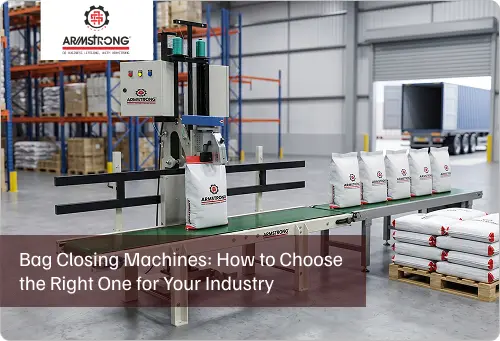
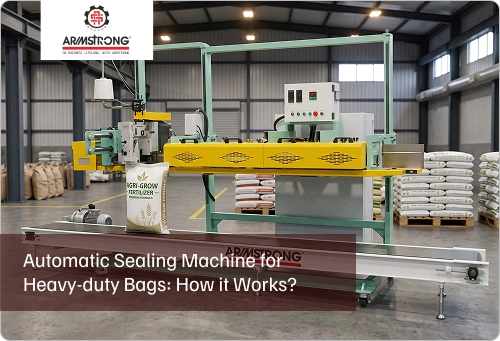
A vertical heat sealing machine is commonly used in automated packaging lines where bags are conveyed through the sealing process while remaining upright.
High-volume applications are well-suited to these systems because they work in conjunction with filling machines, enabling a continuous production flow. An industry like powder handling, feedstuff production, grain production, or industrial material management typically chooses vertical sealers based on efficiency as well as the reliability of the seals produced by the machines.
2. Continuous Heat Sealing Machines
The machines that provide continuous sealing are designed specifically for packaging operations where speed is paramount.
The continuous sealing machine will seal many bags very quickly in a serialized process, therefore producing a continuous stream of finished sealed packages. This type of operation maximizes productivity and is commonly found in facilities that have high-volume daily production levels.
3. Heavy-Duty Heat Sealing Machine
Some applications require stronger sealing capability than standard equipment can provide.
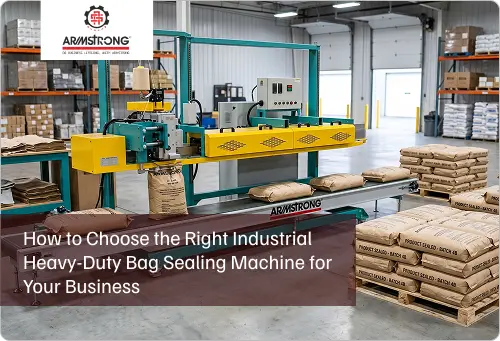
A heavy-duty vertical heat sealing machine can seal materials using sealers on thick packaging and more than just heavy bags. These types of systems will be used in various industries and with very tough products. In general, heat sealers are used to seal large PE bags, chemicals, construction materials, and other products that require a strong seal.
4. Integrated Sewing and Heat Sealing Systems
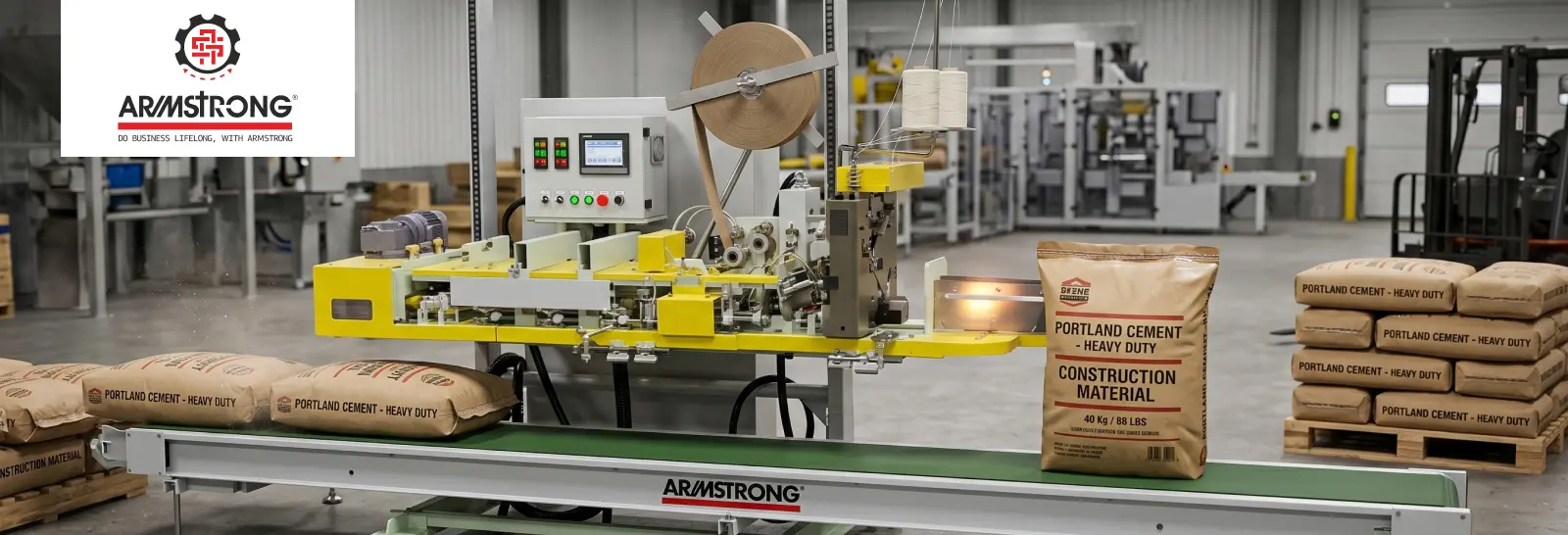
Most of the time, there are also PE liners included in PP woven bags and kraft paper bags. When manufacturing these products, the manufacturers usually combine heat sealing and stitching when making the bags.
To produce a protective barrier, the inner liner is first heat-sealed. Once this is complete, the outer bag is then stitched closed to provide product protection and mechanical strength. This technique is used extensively throughout the industrial manufacturing community due to its versatility as a packaging method.
Heat sealer machines that are heavy-duty can seal materials using sealers on thick packaging and more than just heavy bags. These types of systems will be used in various industries and with very tough products. In general, heat sealers are used to seal large PE bags, chemicals, construction materials, and other products that require a strong seal.
When determining a product's quality, the integrity of that product is amongst the most important aspects to consider. Therefore, when sealing products together so they will stay together, companies often use heat sealers. Examples of when using a heat sealer would be appropriate include:
Providing a pack that prevents moisture from ruining the flour inside during storage.
Providing a pack with an additional barrier of protection for shipping the powdered milk.
In addition, chemical manufacturers rely heavily on having secure, tight, and leak-proof closures for shipping their products.
By using a heat sealer, you create a much stronger barrier than just stitching and therefore can provide a much greater amount of detail about the contents of each item packaged in a single run. Even using a manual heat sealer, you will achieve different sealing results, depending on the skill level of the person using the heat sealer. Having automated systems set up using these types of machines will create the sealed finishes uniformly throughout the entire run of products.
When evaluating the best closing machines for industrial packaging, manufacturers should consider factors such as bag type, packaging material, production volume, environmental conditions, and integration requirements. The best solution is usually the one that aligns most closely with operational needs rather than simply offering the highest speed.
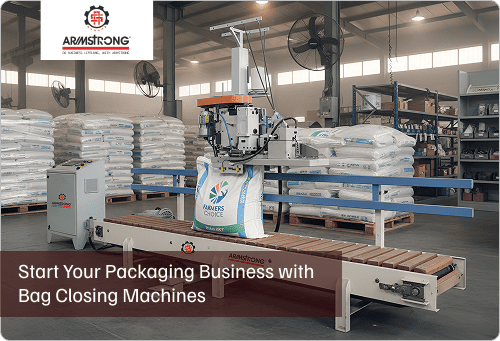
See More: Start Your Packaging Business with Bag Closing Machines
Heat sealing technology has become a standard requirement across many industrial sectors because of its ability to improve packaging protection and product safety.
1. Animal Feed Industry: Feed products are frequently stored and transported in varying environmental conditions. Heat sealing helps reduce moisture exposure and maintain product quality throughout the distribution process.
2. Flour and Food Processing Industry: Food products require packaging that protects against contamination and environmental exposure. Heat sealing helps create cleaner and more secure package closures.
3. Milk Powder Industry: Milk powder manufacturers rely on packaging integrity to maintain product freshness and quality. Properly sealed liners provide an additional layer of protection during storage and transportation.
4. Chemical Industry: Many chemical products require reliable packaging to prevent leakage and protect products from moisture and contamination. Heat sealing supports these requirements while improving packaging consistency.
5. Agricultural and Industrial Products: Fertilizers, minerals, industrial powders, and other bulk products often benefit from heat-sealed packaging because it helps improve product protection and reduce losses during handling.
Choosing a heat sealing machine involves more than comparing technical specifications.
Industrial packaging places high expectations of performance on machines, 24/7.
As a premier heat-sealing machine manufacturer, Armstrong works with customers to develop dependable, efficient, and durable packaging solutions. Our products are designed for a variety of industries such as animal feed, food processing, chemical, agricultural, and industrial manufacturing.
In addition to achieving superior package quality, using Armstrong heat sealing equipment can also improve overall productivity and operational efficiency. Whether you require a thermal seal for woven bag final coats or sealing of heavy-gauge polyethylene, Armstrong offers a broad range of heat-sealing equipment to meet today's manufacturing requirements.
In addition to the performance of these machines, businesses will receive reliable support, durable engineering, and solutions developed for real-world manufacturing conditions.

Mistakes related to packaging in our plant happen increasingly through transit, with extended storage, with our customers receiving them, and then it is often too late to fix. Thus, reliable heat seals are critical in modern-day packaging design and must be treated as a key component to packaging solutions.
The usage of a reliable heat sealing machine enables a manufacturer to reduce exposure to moisture, dust, contamination, or leakage, as well as to ensure the end product is consistently of high quality. Therefore, access to and the use of a reliable heat sealing machine enables a manufacturer to improve their product protection, reduce their loss due to the inadequacy of their packaging, and provide their customers with confidence in their supply chain.
If you are looking to increase your production efficiency while improving your packaging performance, heat sealing is one of the most efficient and cost-effective packaging techniques available today.
Explore more articles on innovation, engineering, and industry leadership.
December 7, 2024
September 8, 2025
October 15, 2025
November 25, 2025
November 26, 2025
December 29, 2025
January 27, 2026
February 23, 2026
February 24, 2026
August 10, 2026
August 20, 2026
August 26, 2026
September 16, 2026
September 19, 2026
 Previous