Modern Automatic Machines for Big & Jumbo Bag Production

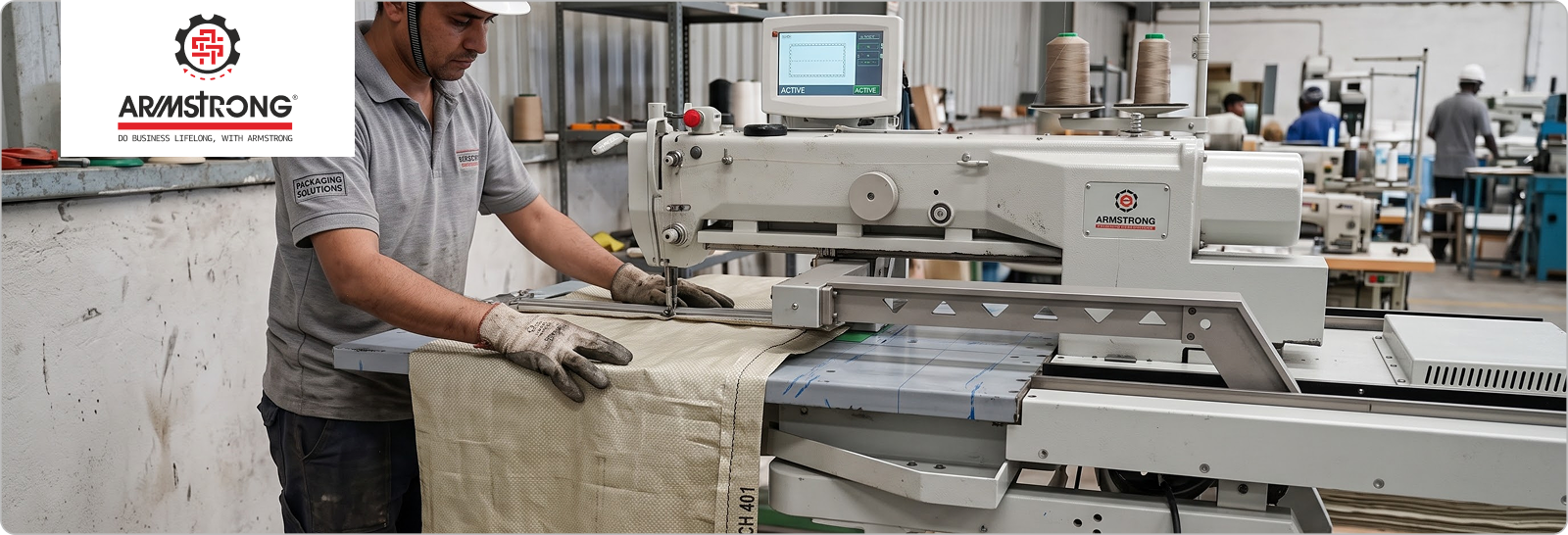
The jumbo bag making machine is part of the packaging equipment for industries where bulk materials are packed, stored, and shipped in great volume. For larger volumes of production, the demand increases for consistency in cutting, sewing, loop attachment, cleaning, and finishing. Big Bag Filling Machine For Jumbo Bags can also support the filling stage by enabling efficient and controlled handling of bulk materials.
An FIBC, or big bag, machine automates repetitive functions while providing greater process control and lower handling costs. Today's FIBC production equipment is configurable for most bag sizes, constructions, materials, and finishing options, making automation a must for high-volume manufacturers catering to tough bulk-packaging markets.
"In large-scale production, consistency is just as important as speed."
An automatic jumbo bag making machine can automate parts of the FIBC manufacturing process, typically known as a big bag or jumbo bag. Depending on the manufacturing process, these processes may include fabric cutting, panel preparation, sewing, looping, liner processing, cleaning, testing, and finishing.
With production volumes of FIBCs, tolerances in dimensions and seams should be accurate because the final bags may carry heavy material weights. This means problems with panel sizes, stitch quality, or loop placement can affect assembly, handling, and performance of the ultimate bag.
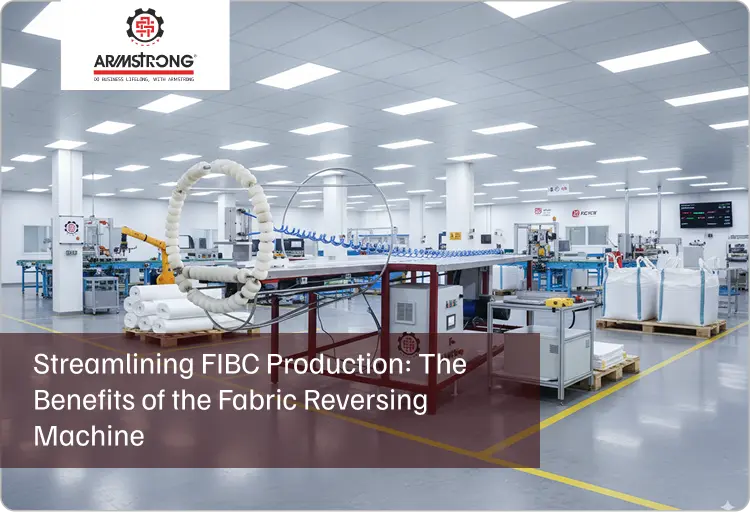
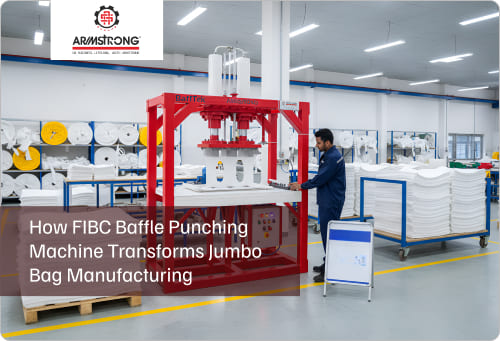
FIBC range includes fabric cutting, sewing, liner processing, cleaning, testing, spout punching, baffle punching, and finishing. It has solutions for U-panel, four-panel, baffle, liner-filled, spout, and corner-loop bags. But by designing multi-purpose equipment, allows customers to develop production lines for their particular FIBC design.
Automation in jumbo bag production is important, as it can remove some of the repetitive steps that can have a direct impact on productivity and quality. It can also reduce operator variation based on experience, speed of handling, and fatigue, compared to automation that can be set to hold specific production parameters. Take cutting, for example.
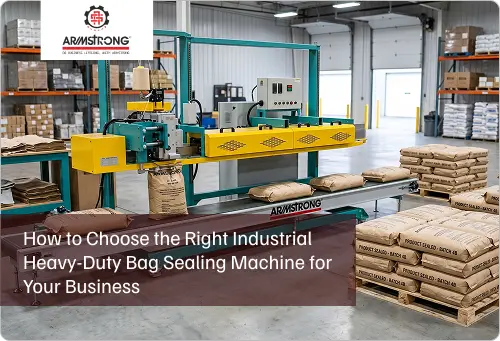
FIBC Fabric Cutting Machine range for PP woven fabric offers hot, cold, zigzag, star-cut and round spout-cut options. An automatic sealing machine for heavy-duty bags can also support consistent and efficient bag sealing as part of an automated production workflow.
The fabric width can be up to 2,200 mm, and the cutting length is from 200 to 25,000 mm. Indeed, automation reduces dependency on the operator, and range of FIBC machinery has automation, improved accuracy, less operator dependency, and consistently higher-quality bags as its production hallmarks. The advantage is therefore not just more bags, but more controlled and repeatable processes.
Big bag production involves multiple operations, so the machinery required depends on the bag construction, fabric, capacity, production volume, etc.
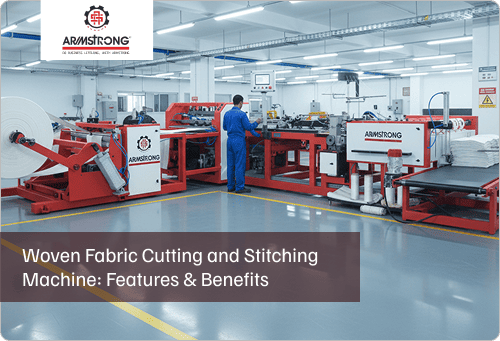
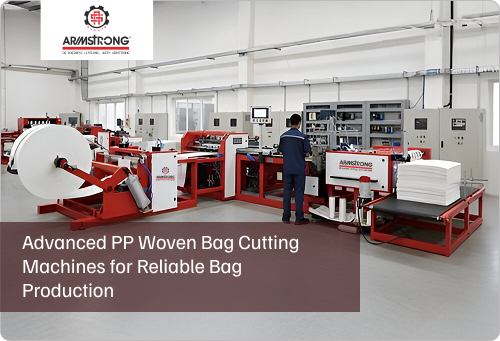
Fabric cutting machines prepare PP woven fabric according to the required dimensions. Accurate cutting is important because inconsistent panels can create problems during sewing and assembly.
FIBC Fabric Cutting Machine is designed for PP woven fabric and can process tubular or flat fabric in widths of 1.4 meters and 2.2 meters.
This makes a FIBC jumbo bag cutting machine useful for manufacturers producing different FIBC designs where repeatable panel dimensions are essential.
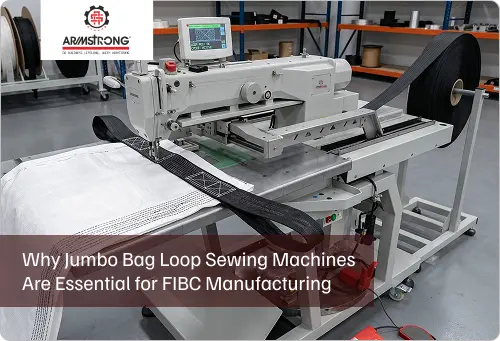
Lifting loops are an essential part of all FIBCs, as they are used to lift and move the full bag. As a result, uniform stitching on all loops is essential.
Armstrong's automatic Jumbo Bag Loop Sewing Machine is designed for high-speed, heavy-duty continuous operation, with a sewing speed of up to 1,400 rpm and adjustable stitch length up to 12 mm.
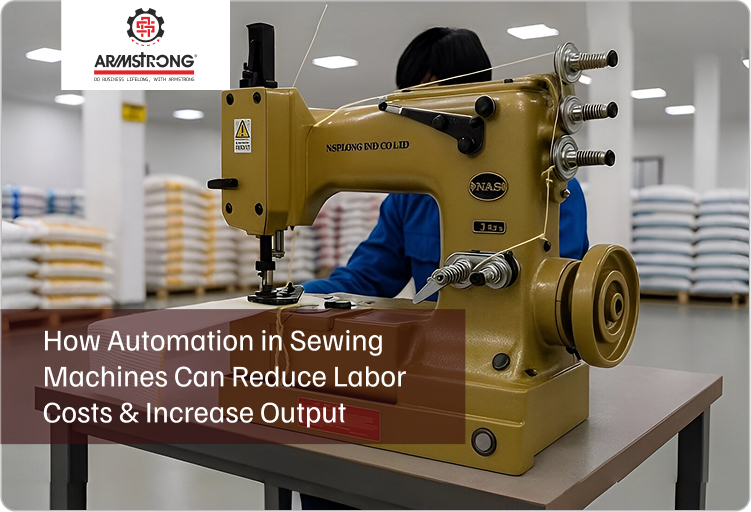
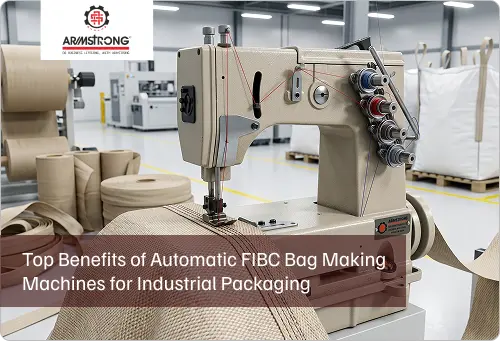
Once cut and prepared, panels are assembled and joined via appropriate stitching processes. FIBC sewing equipment is suited to the tough materials and infrastructure that are characteristic of big bags.
FIBC sewing equipment portfolio comprises FIBC bag sewing machines, FIBC big bag sewing machines, and jumbo bag loop sewing machines.
The most appropriate sewing machine is determined by the type of seam, construction of the bag, fabric, and pace of production required.
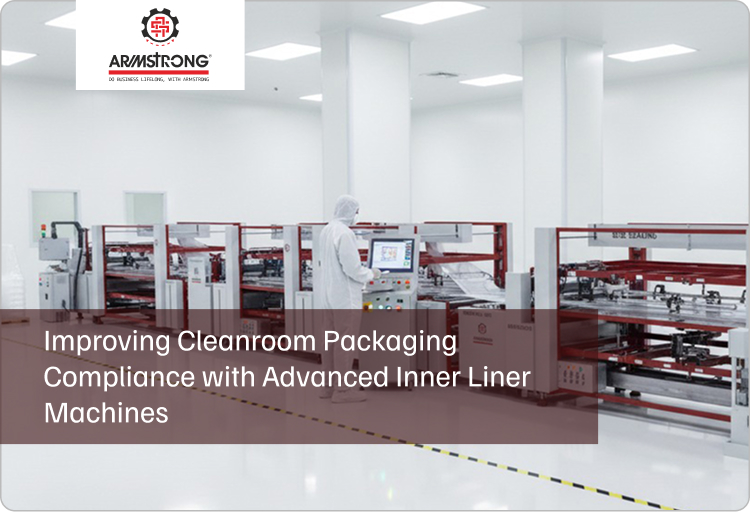
Cleaning is another stage that is important when bags need controlled cleanliness before packing, storage, or further handling. CleanTek FIBC Jumbo Bag Cleaning Machine uses pre-filtered air to remove loose contaminants and has a static discharger and HD cameras for monitoring.
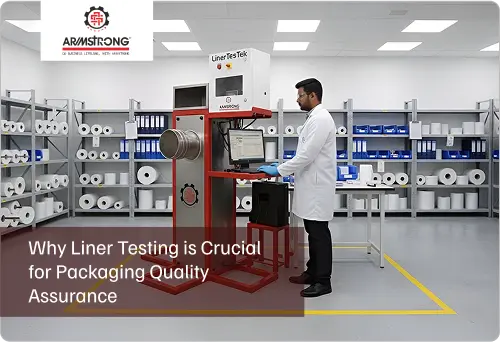
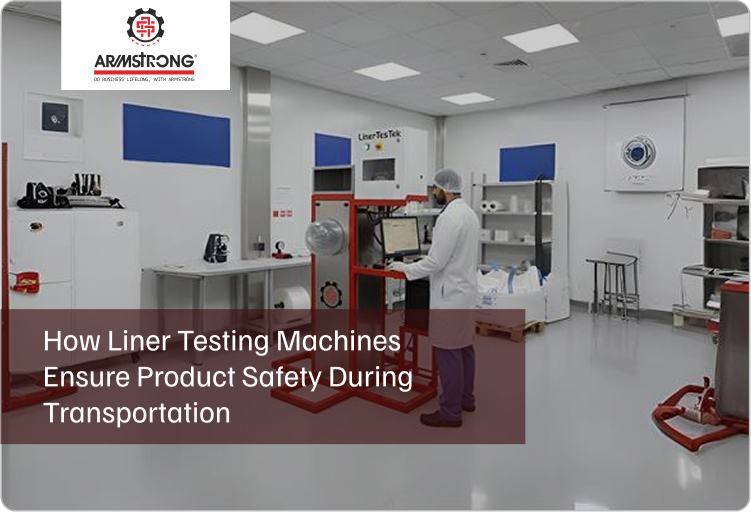
Testing equipment allows manufacturers to test completed bag performance and QC. Armstrong's bag testing machine offers PLC and SCADA-based control and is suitable for a range of FIBC and jumbo bag configurations.
Not all operations are simply meant to be automated. Manufacturers need to identify the repetitive manual tasks that cause bottlenecks and see if more automation with the right machinery can make a significant difference in production, quality, or labor efficiency.
| Factor | Automatic Machines | Semi Automatic Machines |
|---|---|---|
| Operator involvement | Lower for repetitive operations | Higher manual involvement |
| Production consistency | High repeatability | More dependent on operator handling |
| Labour dependency | Generally lower | Generally higher |
| Production volume | Suitable for continuous production | Suitable for moderate or flexible production |
| Process control | Greater parameter control | More manual adjustments |
| Initial investment | Generally higher | Generally lower |
| Flexibility | Suitable for defined production workflows | Useful where manual intervention is frequently required |
Automation can have a positive effect on many factors in the production of jumbo bags, from less manual, repetitive tasks to a more consistent output. Integrated and automated machinery can assist manufacturers in managing increased volumes while ensuring quality and boosting productivity.
Automated cutting and sewing can maintain consistency and stitch positioning across batches. This becomes important when producing bags to fixed customer specifications.
Automation reduces the repetitive handling required from operators. Instead of manually repeating every step, operators can focus on machine monitoring, quality checks, and production adjustments.
Modern machines can use PLC controls, programmable settings, sensors, and monitoring systems to maintain operating parameters. This makes it easier to repeat production settings and identify deviations.
Automated equipment can perform repetitive processes continuously. When cutting, sewing, loop attachment, cleaning, and testing are coordinated effectively, manufacturers can improve efficiency.
Consistent construction is important when producing 1000 kg jumbo bags, according to intended dimensions, construction, and handling requirements.
"Automation works best when every stage of the process is designed to support the next."
Manufacturers can also review Jumbo Bag Loop Sewing Machines for a closer look at the role of automated loop stitching within FIBC production.
The right equipment is according to the machine needs of the manufacturer, not the speed or price. Consider bag capacity, construction, size, fabric type, amount of production, and needed finishing.
Big bags are used across industries where bulk materials need efficient storage, transportation, and handling. Common applications include:
Different applications can require different bag constructions. For example, jumbo plastic bags with handles need appropriate lifting-loop construction, while liner-filled bags may require additional liner-processing equipment.
The application should therefore be considered before selecting machinery. Bag capacity, filling method, material characteristics, lifting arrangement, liner requirements, and storage conditions can all influence the final design.
Armstrong has more than four decades of experience in finishing machinery for the PP/FIBC and woven-sack industries. Its current portfolio includes more than 80 products and covers processes ranging from fabric cutting and liner sealing to baffle punching, bag rolling, and high-speed sewing. As an automatic machine for jumbo bag manufacturers, we provide equipment designed to support different stages of automated bag production.
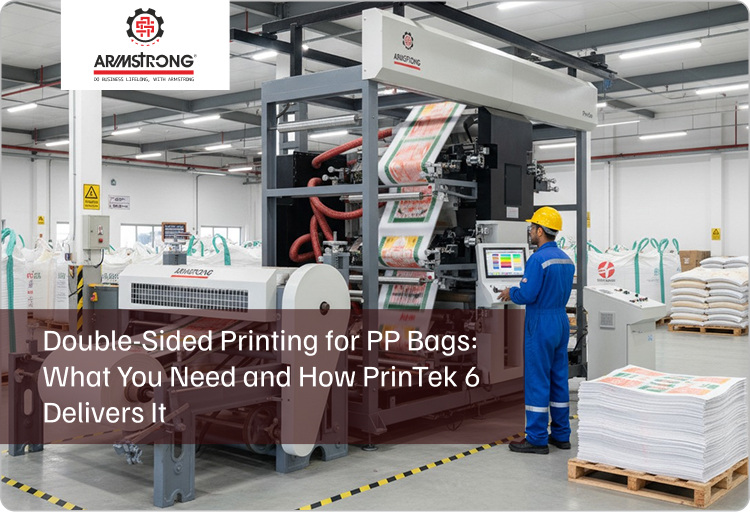
The company's FIBC machinery range includes fabric cutting machines, sewing equipment, liner systems, spout and baffle punching machines, cleaning machines, testing machines, printing equipment, and other specialized solutions.
Armstrong's approach allows manufacturers to evaluate individual machines according to their production needs and, where required, develop a broader equipment setup around multiple FIBC operations. Its focus on automation, precision, and production consistency can support manufacturers working with different bag constructions and industrial applications.

Modern big and jumbo bag manufacturing increasingly depends on controlled and repeatable production processes. Automatic cutting, sewing, loop attachment, cleaning, and testing machines can reduce repetitive manual work while improving consistency across production batches. The right automation strategy depends on the bag capacity, construction, material, production volume, and required finishing standards. Whether the requirement involves 1000 kg jumbo bags, a jumbo bag 500kg, or specialized FIBC designs, machinery should be selected according to the actual production workflow.
Explore more articles on innovation, engineering, and industry leadership.
December 7, 2024
September 8, 2025
October 15, 2025
November 25, 2025
November 26, 2025
December 29, 2025
January 27, 2026
February 23, 2026
February 24, 2026
August 10, 2026
August 20, 2026
August 26, 2026
September 16, 2026
 Previous