Your cement bags need to contain the load (that can be quite significant!), be relatively dust-free, and be able to survive a journey, stacking, and lots of movement without impacting the product within the bag. Making sure you have a properly specified cement bag making machine allows manufacturers to produce bags with predictable sizes, durable construction, and the output levels required to keep pace with high volumes. Selecting the right machine can also limit the amount of manual processing, material waste, and variations within the finished products.
“Good packaging protects more than the product; it protects the value of the product throughout its journey.”
The structure of cement bags can be either PP woven type or the laminated type. Therefore, different machines can be used depending on the materials, bag structure, production quantities, degree of automation, or manual application. This guide will demonstrate the major types of machines, production processes, parameters, and features of the machine.
A cement bag manufacturing machine is a machine or apparatus equipped to transform adequate raw materials into a finished bag for packing cement or building material. Different types of bags may go through the printing process, laminating process, cutting process, folding process, sewing process & stacking process.
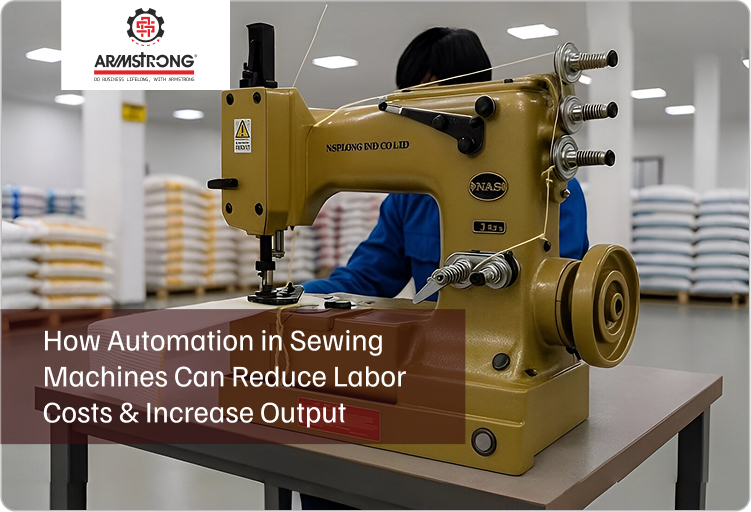
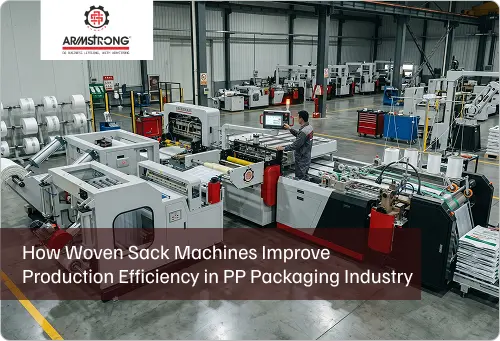
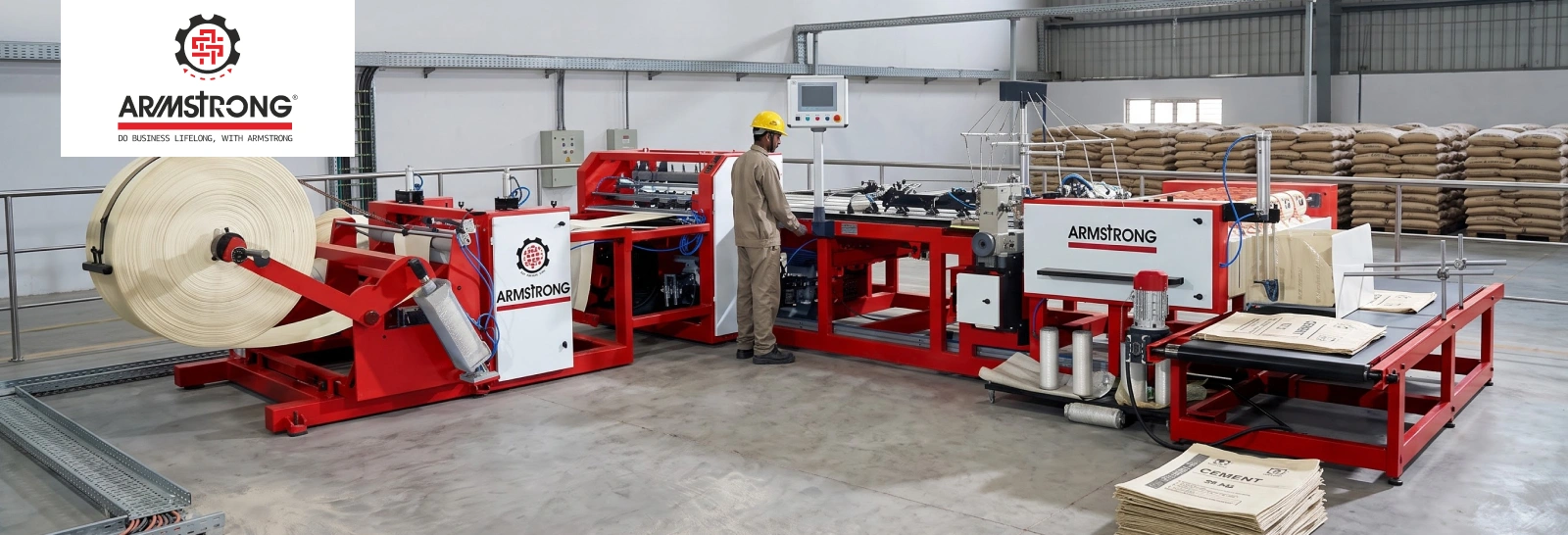
A woven cement bag is made from raw PP or HDPE fabric material, converted into a finished sack with automated bag cutting and sewing machines. We are one of the renowned manufacturers of the “High-Speed Bag Cutting & Sewing Conversion Line” that efficiently converts PP/HDPE tubular fabric & BOPP tubular fabric into a finished bag through a cutting, folding, stitching & stacking system.
The term cement bag making therefore describes a series of connected manufacturing operations rather than one machine alone.
The appropriate machinery depends on the construction and intended application of the bag.
PP woven bags are made from woven polypropylene fabric and are valued for strength and durability. Their production can involve fabric preparation, lamination, cutting, sewing, and finishing equipment.
Lamination adds a protective layer to woven fabric. It can improve surface protection, printability, and resistance to external conditions, depending on the bag design.
Paper cement sacks use multiple paper layers and follow a different production process from woven bags. A cement paper bag making machine therefore needs to be selected according to the paper structure, bag design, valve arrangement, and required production capacity.
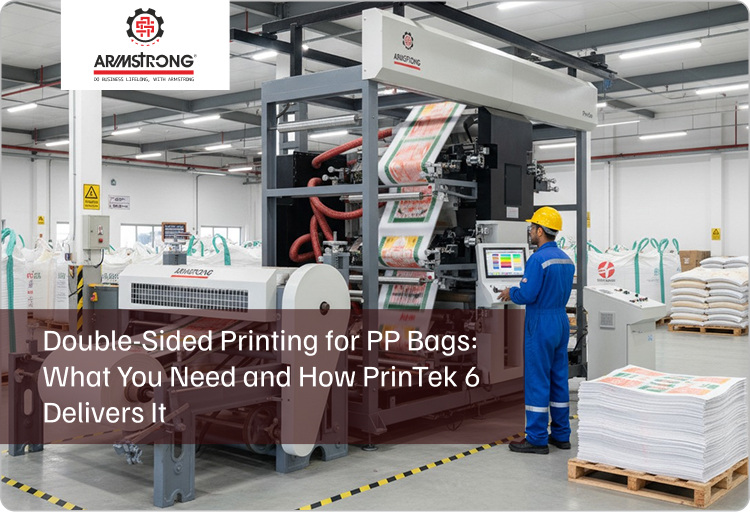
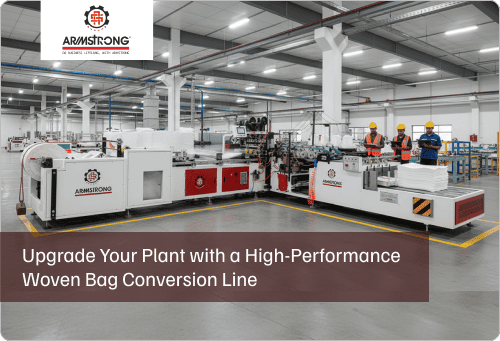
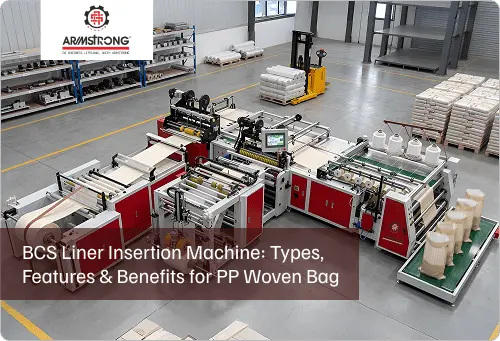
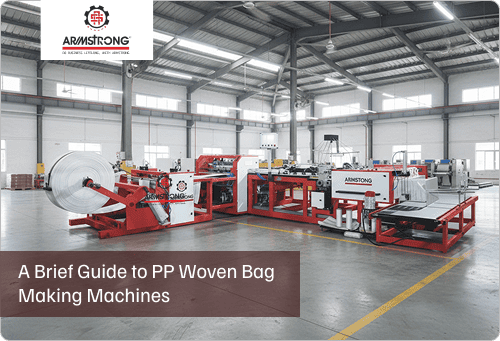
High-volume woven bag production can use automated conversion systems that combine several operations. Armstrong's BCSTek+ conversion line and such conveyor machines, for example, integrates cutting, folding, stitching, and stacking for continuous bag production.
The exact sequence depends on the bag structure, but woven cement bag production generally follows these stages.
PP or HDPE woven fabric is prepared in tubular or roll form according to the production setup.
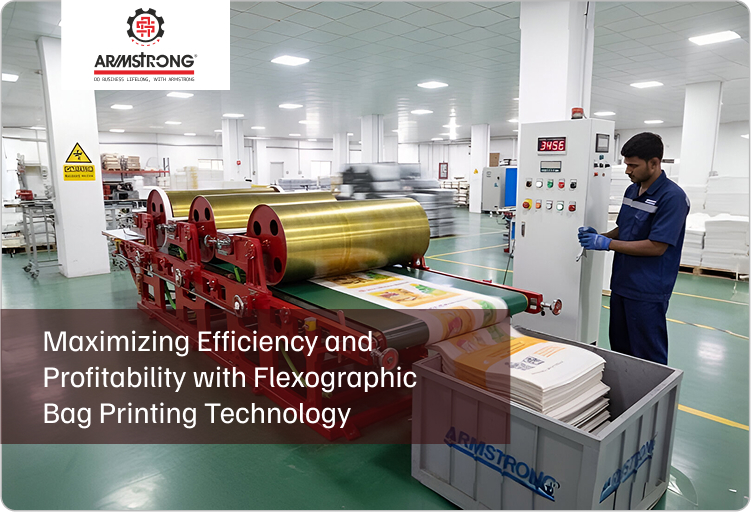
Where required, the fabric is laminated to provide additional protection. Printing can add branding, product information, specifications, and other markings.
The material is cut according to the required bag length. Accurate cutting is important because dimensional variations can affect subsequent stitching and the finished bag.
The cut material is folded and stitched to create the required bag structure. Automated systems can perform these operations continuously.
Excess thread and unwanted material are removed to produce a cleaner finished bag.
Finished bags are stacked for inspection, storage, transportation, or movement to the filling line.
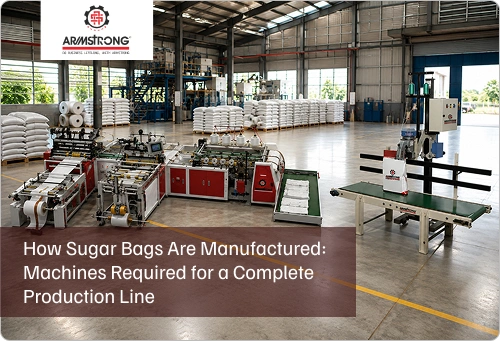
A complete production setup can involve several machines, depending on the bag specification and which big bag making machine it is
Armstrong's High-Speed Bag Cutting & Sewing Conversion Line performs cutting, folding, stitching, and stacking in an integrated process. Its servo-driven operation, PLC-HMI controls, and automated transfer system are designed for high-volume woven bag production.
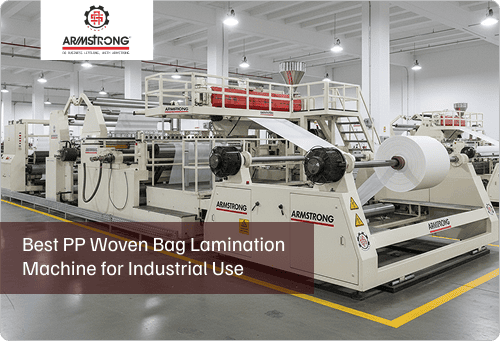
A PP woven bag lamination machine applies a protective layer to woven fabric. This can improve surface characteristics and provide additional protection where the bag design requires it.
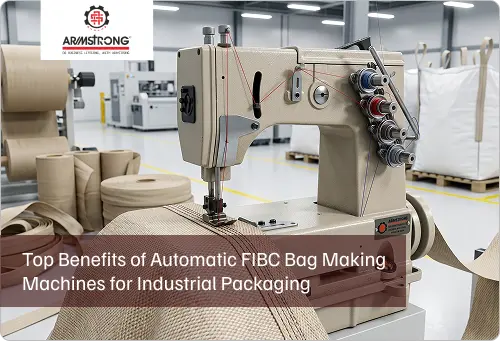
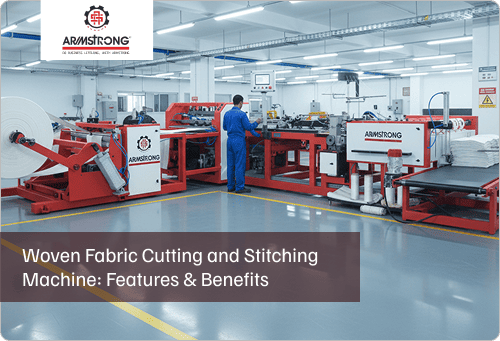
The BCS Machine is designed for woven fabric cutting and stitching applications. It can be used where manufacturers require controlled cutting and stitching of woven material.
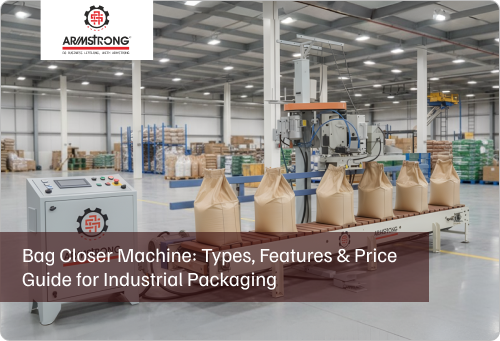
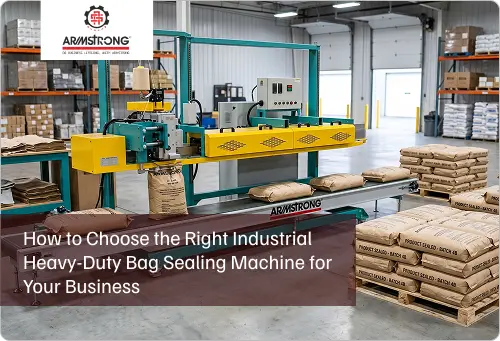
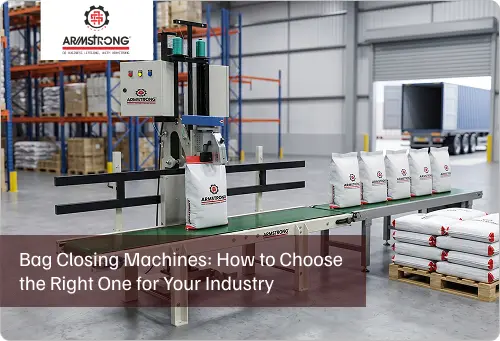
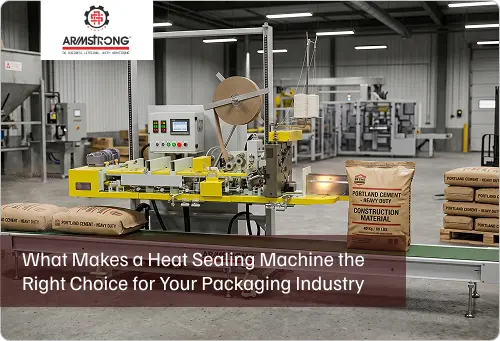
Where the bag construction requires heat sealing, a suitable cement packaging equipment setup may incorporate a bag sealing machine. Armstrong's bag closing machines are designed for compatible plastic packaging bags and produces firm, durable seals.
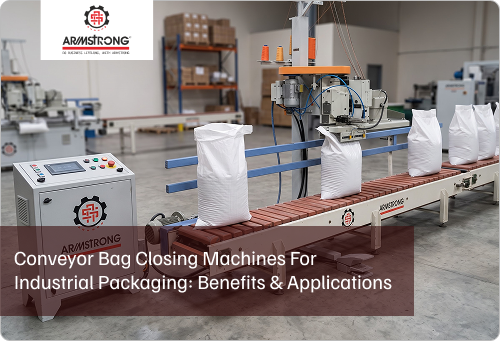
For stitched closures, a bag closing machines can provide the mechanical closure required for filled industrial bags.
The correct combination should always be determined by the actual bag material and construction rather than assuming every big bag making machine is the same.
When evaluating cement packaging equipment, production speed is important, but it is not the only specification that matters.
Determine the required bags per hour, shift, or day. Higher output requirements may justify an automated conversion line.
Check the machine's supported bag width, length, and adjustment range, particularly if multiple bag sizes will be produced.
Confirm whether the machine is designed for PP, HDPE, BOPP, laminated structures, or the particular material being used.
Decide whether manual, semi-automatic, or fully automated production is appropriate for the operation.
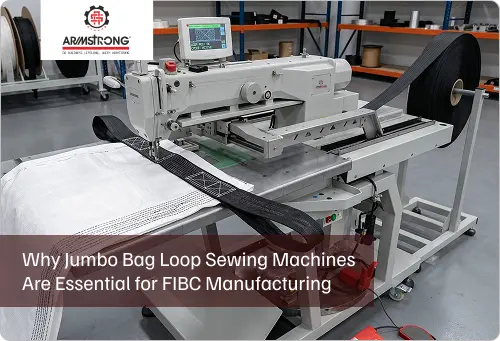
For stitched bags, needle, thread, and stitch configuration can affect seam strength and finished-bag quality.
Consider how the machine will connect with upstream and downstream processes such as fabric preparation, filling, conveying, inspection, and bag closing.
Modern machinery can improve production consistency when properly matched to the application.
Servo-driven operation provides controlled movement for processes such as cutting and transfer.
PLC-HMI controls allow operators to manage machine functions from a centralized interface.
Automated cutting and stitching reduce repetitive manual handling while maintaining consistent bag dimensions and seams.
Automatic transfer and stacking make it easier to move finished bags between production stages.
Repeatable production helps manufacturers maintain similar dimensions, stitching, and finishing across large production runs.
“Automation is not about replacing people. It is about making people more productive and processes more consistent.”
For cement bag makers, that point could matter. Automation means little or nothing more when it removes drudgery than when it allows more control over the parts of manufacture that will allow tiny variations to add up.
Cement bag-making machinery is primarily used to manufacture packaging for cement and other construction materials.
Typical applications include:
The same woven-bag technologies can also be applicable to fertilizer, agricultural, chemical, and food-grain packaging where the material and bag specifications are compatible.
The right machine should be selected around the actual production requirement.
First determine whether the bags will be PP woven, laminated, BOPP, or paper-based. This decision influences the entire manufacturing process.
A manufacturer producing moderate quantities may have different requirements from a plant running continuously across several shifts.
If multiple bag sizes are required, check the machine's adjustment and changeover capabilities before purchasing.
Automation can reduce manual intervention, but the level of automation should correspond to actual production needs and expected output.
Technical assistance, operator training, spare parts, and maintenance support are important when machinery is expected to operate for extended production cycles.
Even advanced cement packaging equipment requires preventive maintenance. Cement and construction-material production can generate considerable dust, making cleaning especially important.
Regular inspection can identify small issues before they develop into production stoppages.
Selection of a cement bag manufacturing machine, sugar bag making machine, or even a fertilizer bag making machine is a long-term manufacturing decision. The machine has to comply with the input material, type of bag manufacturing, intended output of production, and degree of automation expected.
Armstrong provides woven-sack and FIBC machines covering cutting, sewing, lamination, printing, inspection, and various other operations for applications from cement, fertilizers, and chemicals to agricultural produce and food grains. Such selection may help the manufacturers in the seamless integration of various steps of production, rather than considering each operation as a stand-alone one.
For manufacturers dealing with woven cement bags, additional machinery that is able to complement the basic bag design may be crucial, particularly once production figures increase and precision assumes higher importance.

A Cement Bag Making Machine is an important part of producing strong, consistent, and production-ready cement packaging. However, there is no single configuration that suits every manufacturer.
The right setup depends on whether the bags are woven, laminated, BOPP, or paper-based, as well as their dimensions, production volume, closure method, and automation requirements.
For woven cement sacks, integrated cutting, folding, stitching, and stacking systems can streamline production and reduce manual handling. Additional lamination, sealing, or finishing equipment can be incorporated where the bag design requires it.
The best investment is therefore not necessarily the machine with the highest advertised speed. It is the system that matches the actual bag specification and delivers reliable production as the business grows.
Explore more articles on innovation, engineering, and industry leadership.
December 7, 2024
September 8, 2025
October 15, 2025
November 25, 2025
November 26, 2025
December 29, 2025
January 27, 2026
February 23, 2026
February 24, 2026
August 10, 2026
August 26, 2026
September 16, 2026
September 19, 2026
 Previous