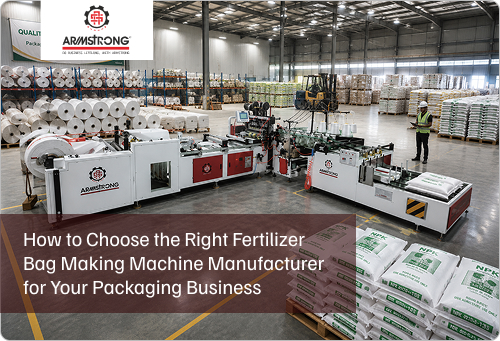
Paper sacks are used in a wide range of industries (cement, agriculture, food processing, fertilizers and chemicals, to name but a few). The process of making them is a multi-stage one, encompassing printing right through to the processing of the material, forming the sack and closing it.
Choosing the right paper sack making machine will depend upon your packaging requirements, the specifications of the material you are using and the volume you expect to produce. The machine you select will need to be appropriate for the type of sack you are making and will have to be capable of producing a consistent quality of product. The selection of a suitable paper sack machine is therefore an important part of planning your production process.
This blog looks at the different types of sack making machinery available, the factors to consider before buying and how to find a reliable manufacturer.
A paper sack making machine is industrial equipment used for different stages of paper sack manufacturing, including printing, material processing, bag formation and bottom closing.
Paper sacks are normally made from kraft paper and may have multiple layers depending on the product. Cement, fertiliser and the like will normally be multiwall for the right strength and for the right handling. The equipment used for these processes forms part of a wider sack manufacturing machine setup.
A typical production process involves five stages:
These operations can be carried out either on separate machines or on an integrated production line depending on the sack design and the manufacturing requirements.
The process of sack making involves the use of a variety of machines for the various stages of manufacture. There are some machines that are suitable for paper sacks, while others are meant for PP/HDPE woven sacks, FIBCs, and non-woven sacks. Manufacturers working with different packaging materials may also require a PP sack making machine, depending on their production requirements.
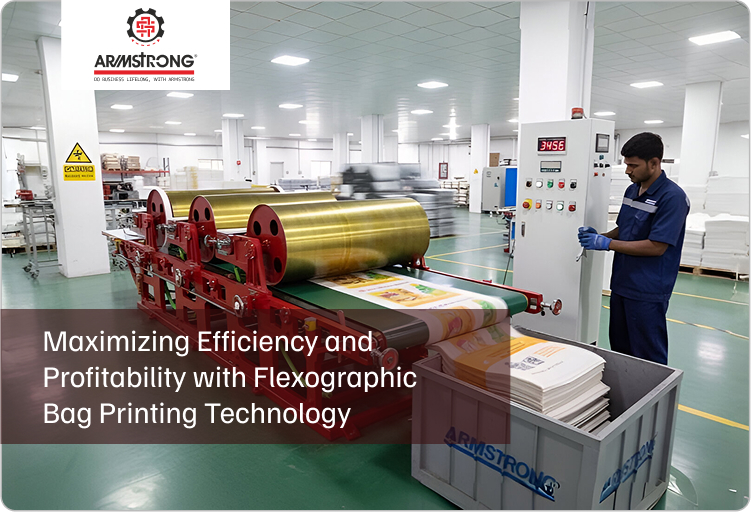
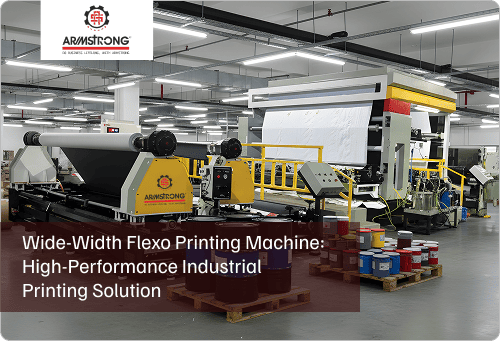
Printing on large-format packaging materials such as paper, PP/HDPE woven fabrics and non-woven rolls requires equipment that can handle wider material surfaces. A Wide-Width Flexo Printing Machine uses flexible printing plates to print onto the appropriate substrates.
Armstrong's machine features tension control, quick-drying ink technology and convenient plate changing. These features help maintain consistent printing across wide rolls of material.
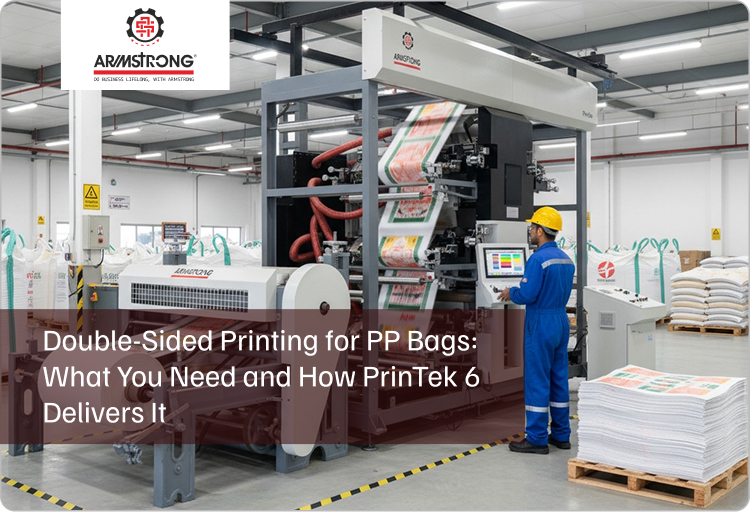
Multi-color printing and accurate sheet cutting are important for manufacturers producing printed woven packaging. The Six-Colour Flexo Printing Machine with Sheet Cutting Machine combines multi-color flexographic printing with an automatic sheet-cutting arrangement. Armstrong's PrinTek 6 is primarily designed for printing on PP/HDPE woven sacks.
It supports water-based and solvent-based inks, with optional features such as corona treatment, electronic position control and video inspection. It is suitable for manufacturers requiring multi-color printing and cutting for woven packaging.
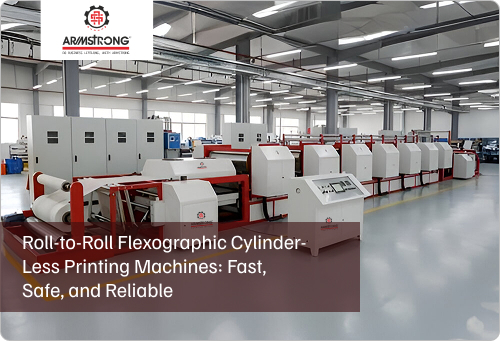
Continuous printing on woven packaging materials requires machinery that supports uninterrupted material movement and consistent print registration. The Six-Colour Roll-to-Roll Flexographic Cylinder-Less Printing Machine uses a cylinder-less mechanism with PLC-based controls.
The roll-to-roll type allows for continuous transport of materials and hence is recommended for large-scale production processes. It is essential to verify the compatibility of substrates before using such machinery.
Branding, product information and printed designs are commonly applied to laminated and unlaminated PP/HDPE woven sacks. These requirements can be addressed using a Woven Sack Flexographic Printing Machine, which is commonly used for industrial sack packaging.
Armstrong's Printek model offers printing widths of up to 4.2 metres and includes features such as ink circulation, digital counters and registration control to support print consistency.
Flexible Intermediate Bulk Containers (FIBCs), commonly known as jumbo bags, are used to transport bulk materials across the agricultural, chemical and construction industries. Printing logos, product information and handling details on these bags requires compatible equipment, such as a Flexographic FIBC Printing Machine.
The machine applies logos, product information and handling details to compatible FIBC materials. Print clarity and registration are important considerations in large-format bag printing.
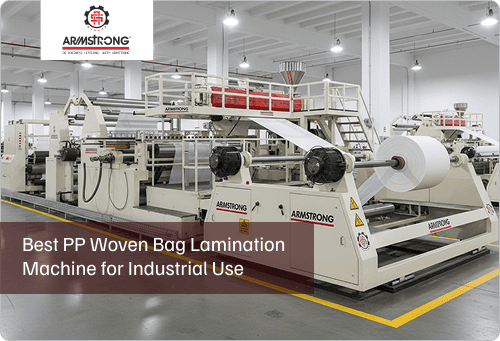
Applying a coating layer to polypropylene woven fabric helps improve its surface finish and provides functional properties suited to specific packaging requirements. This process is carried out using a PP Woven Bag Lamination Machine.
Armstrong's LAMTEK 1650 uses T-die coating and co-extrusion technology for woven sacks and FIBCs. It is designed to process both tubular and flat PP/HDPE woven fabrics.
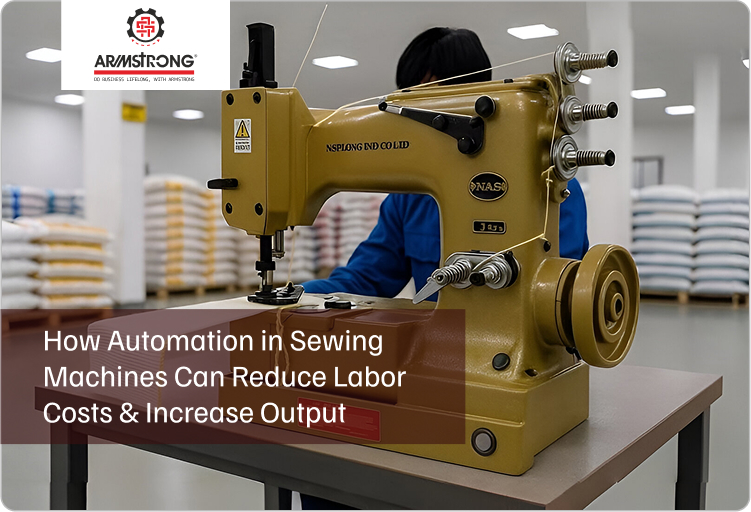
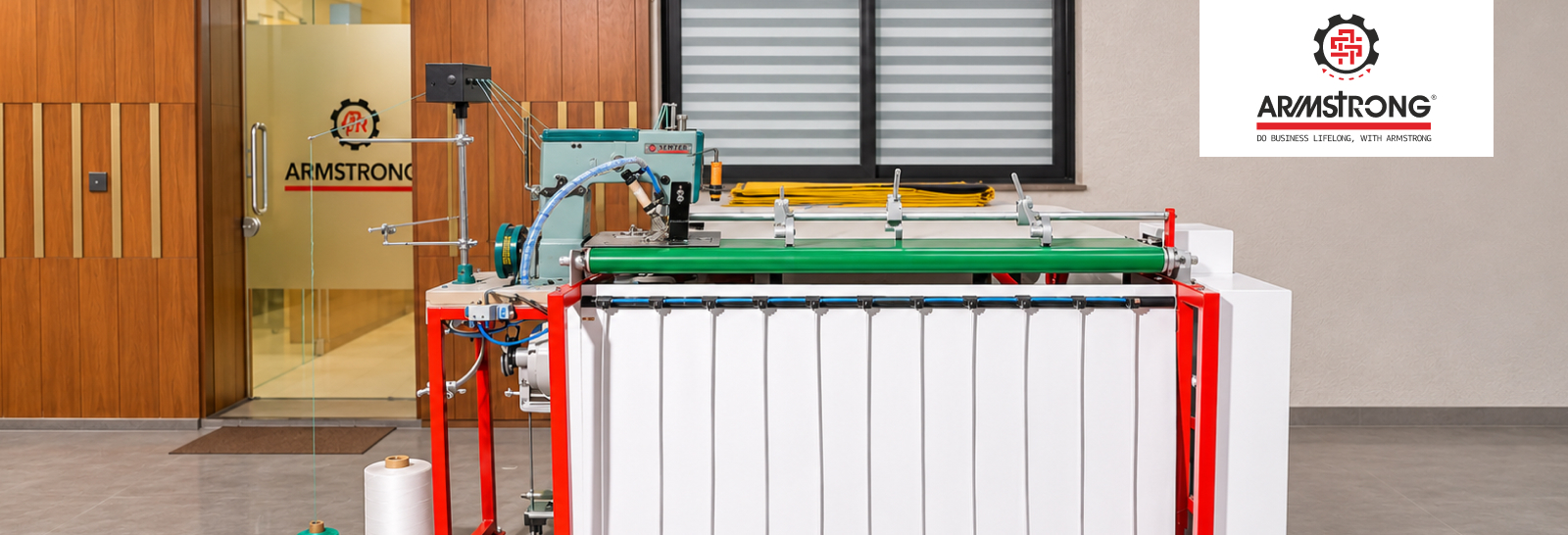
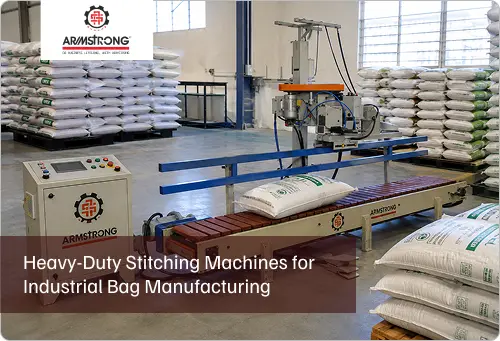
Closing the bottom seam is an important stage in the manufacturing of compatible industrial bags. This operation can be performed using a Bottom Sewing Machine with Auto Cutter, which is designed to close the bottom seam of industrial packaging.
Armstrong's ST 502 HD supports PP, HDPE, LENO, BOPP, non-woven and multiwall paper sacks. Its bobbinless stitching system, automatic thread cutting and adjustable stitch length help simplify the bag-closing operation across different material types.
Woven fabrics used in tarpaulin manufacturing require a laminated layer to achieve the required surface finish and functional properties. This process is supported by a Tarpaulin Lamination Machine.
These products are used in agriculture, construction and transportation. Although not intended for paper sack production, this equipment forms part of the wider industrial fabric processing sector.
Non-woven materials used for packaging applications may require both printing and lamination to achieve the desired surface properties. These processes are handled by Non-Woven Lamination and Printing Lines, depending on the material structure and intended application.
Printing adds branding and product information, while lamination provides the required surface properties. These lines are relevant to manufacturers producing non-woven bags and packaging products.
Before you go any further and start comparing machine prices and production speeds, you need to have a clear idea of your manufacturing requirements. The following factors will help you to define what you're looking for when selecting a suitable sack making machine.
Start by establishing what material you're going to be processing. Paper, PP woven fabric, HDPE and non-woven all have very different handling and processing characteristics.
Compare your specifications with the manufacturer’s:
Do not take it for granted that equipment intended for woven sacks will be suitable for paper.
The size and shape of your sacks will dictate the machine's working range. You need to look at the minimum and maximum sack width and length, number of paper layers, bottom construction and the intended load. If you're producing a range of sack sizes, then you'll need to check the machine's adjustability prior to buying.
Work out your own daily and monthly production requirements and compare those with the manufacturer's stated machine capacity. Of course, the actual output will vary depending on the thickness of the material, the size of the bag, the way the operator handles the machine and the number of changeovers.
Wherever possible, ask for a demo using your actual material and product specs.
If your packaging has any significant branding or product information on it, then you'll need to check the machine's printing capabilities. Printing width, number of colours, registration, drying system and ink compatibility all need to be considered. With woven packaging, you'll also need to establish whether lamination or any other finishing is required.
Automation can of course eliminate the need for repetitive manual work and provide for consistent production. Look for practical features such as controlled material feed, tension control, digital controls and automatic thread cutting (as appropriate to the machine's function).
Also look at the operator training requirements and how easy it is to adjust the production settings.
Check the machine's dimensions, power requirements and installation conditions prior to making your final purchase. Find out about the availability of routine servicing, spare parts and technical support. A machine which fits in with your factory layout and one which is easy to maintain is going to be much easier to get on with in the normal course of operations.
Paper sacks are used for packaging and transporting goods in a number of industries. The type of paper and the way it is constructed will vary according to the product in question, its weight and the way it is to be handled. The selection of an appropriate paper sack making machine depends on these application-specific packaging requirements.
| Industry | Common packaging applications | Important considerations |
|---|---|---|
| Cement and construction | Cement, plaster and dry construction materials | Sack strength and secure closure |
| Agriculture | Seeds, grains and agricultural products | Material suitability and handling |
| Fertilizers | Fertilizer powders and granules | Bag construction and product compatibility |
| Food processing | Flour, food ingredients and dry goods | Packaging specifications and hygiene |
| Chemicals | Industrial powders and compatible chemical products | Material and barrier requirements |
| Animal feed | Feed and poultry nutrition products | Load capacity and seam consistency |
Not every industry uses paper sacks exclusively. Some applications will call for woven or FIBC (flexible intermediate bulk container) packaging depending on the nature of the product and the way it's to be transported.
Suitable machinery can lead to better production control, more consistent output and a more efficient use of resources. The benefits will of course be dependent on the function of the machinery and how well it suits the process. Selecting the right sack manufacturing machine can also help manufacturers align their equipment with their operational requirements.
A machine may look perfectly suited in the product brochures but in reality won't meet your actual production requirements. Don't make these common purchasing mistakes:
A machine manufacturer should be able to explain how their equipment meets your particular production requirements. It's not enough to just look at the product catalog. You need to assess their technical capabilities, their manufacturing processes and their level of support. These considerations are important when evaluating a paper sack machine manufacturer for your business.
| Evaluation area | What to verify |
|---|---|
| Industry experience | Experience with industrial packaging machinery |
| Product range | Equipment suited to your specific production operation |
| Technical specifications | Clearly documented capacity and material compatibility |
| Manufacturing quality | Design, assembly and machine testing processes |
| Customisation | Options suited to your material and production requirements |
| Installation | Commissioning guidance and operator training |
| After-sales service | Technical assistance and troubleshooting |
| Spare parts | Availability of essential replacement components |
Armstrong is an industrial packaging machinery manufacturer with over 40 years' experience and a presence in over 70 export countries. Their range of products includes packaging machinery for paper sacks, woven sacks, FIBC and a whole host of other industrial packaging applications.
For paper-compatible applications, Armstrong offers the Wide-Width Flexo Printing Machine for compatible materials and the ST 502 HD Bottom Sewing Machine with Auto Cutter for specified multiwall paper sacks. Its wider range also includes specialist printing and lamination equipment for woven packaging.
The machines from Armstrong are designed, assembled and tested by themselves. The technical know-how and customizations are available for different manufacturing needs. The manufacturers can talk about their material specifications, bag making and production targets with the people there.

Choosing the right sack-making equipment starts with understanding your material, bag construction and production targets. You need to compare the machine functions, the technical specs, the maintenance requirements and the level of support the manufacturer provides.
The machine you select should be one that is specifically addressing a genuine production requirement, one that will give you a consistent output and one that will work in your manufacturing process.
Explore more articles on innovation, engineering, and industry leadership.
December 7, 2024
September 8, 2025
October 15, 2025
November 25, 2025
November 26, 2025
December 29, 2025
January 27, 2026
February 23, 2026
February 24, 2026
August 10, 2026
August 20, 2026
August 26, 2026
September 16, 2026
September 19, 2026
October 31, 2026
 Previous