 Contact Us

Every woven sack, jute bag, and jumbo bag has seams and those seams carry the weight of the product inside. The bag sewing machines are what make those seams. Some machines sew the bottom and sides as the bag is being made. Others close the bag after it's been filled. Jumbo bags require their own heavy-duty machine and a separate machine to attach the lifting loops. If you get the wrong machine, you can end up with weak seams, slow production and bags that split in transit.
This guide covers the main machine types, how they work and what to check before you buy one for your line.
A bag sewing machine sews together fabric or paper using a needle and strong thread. It can be used on PP and HDPE woven fabric, jute, cotton and paper. In many of the Indian factories, it's just referred to as a bag silai machine.
These machines perform two main jobs:
A machine that closes the filled bags is known as a bag closer. The bag-making machines themselves are normally fixed to a table; the bag closers can be handheld or mounted over a conveyor.
Most industrial machines work in the same basic way:
The needle, thread and feed settings must match the bag material. Thick jute needs a different setup from thin laminated fabric. You can see different setups in Armstrong's Bag Stitching Machines range.
Big bags (also known as FIBC's or jumbo bags) are used to carry large quantities of chemicals, minerals and agricultural products. They are made from a thick woven fabric and require quite strong seams and lifting loops. A standard sack machine is not capable of doing all the work involved in making them.
Most FIBC plants use more than one machine:
The correct combination will of course depend on the bag design, the fabric and the seam requirements.
Machines vary in terms of number of needles and threads, stitch formation and feed system. Here are the principal types used in bag making.
The stitching process is performed with two needles to make two rows of parallel stitches. It is commonly employed to make firm seams for heavy woven bags.
Armstrong's DS-DN-2A Bag Sewing Machine and ST 502 JHD adopt such a configuration for PP/HDPE woven bags and builder bags.
This machine encloses the fabric edge while simultaneously stitching a safety seam. The Armstrong 4000 H is able to complete both functions on FIBC Bags and also feed filler cord. You can find out more about this machine's position within a full production line from our article, Machines for Big & Jumbo Bag Production.
One needle and two threads form a chainstitch seam. Armstrong's SS 3000 2H uses a plain-feed system to move the fabric during general bag sewing and overseaming.
A lockstitch joins the upper and lower threads inside the fabric and is used for secure seams in thick fabrics and bag belts. Armstrong's ST 602 HR and the JUKI LU-1510N are examples of union feed lockstitch machines.
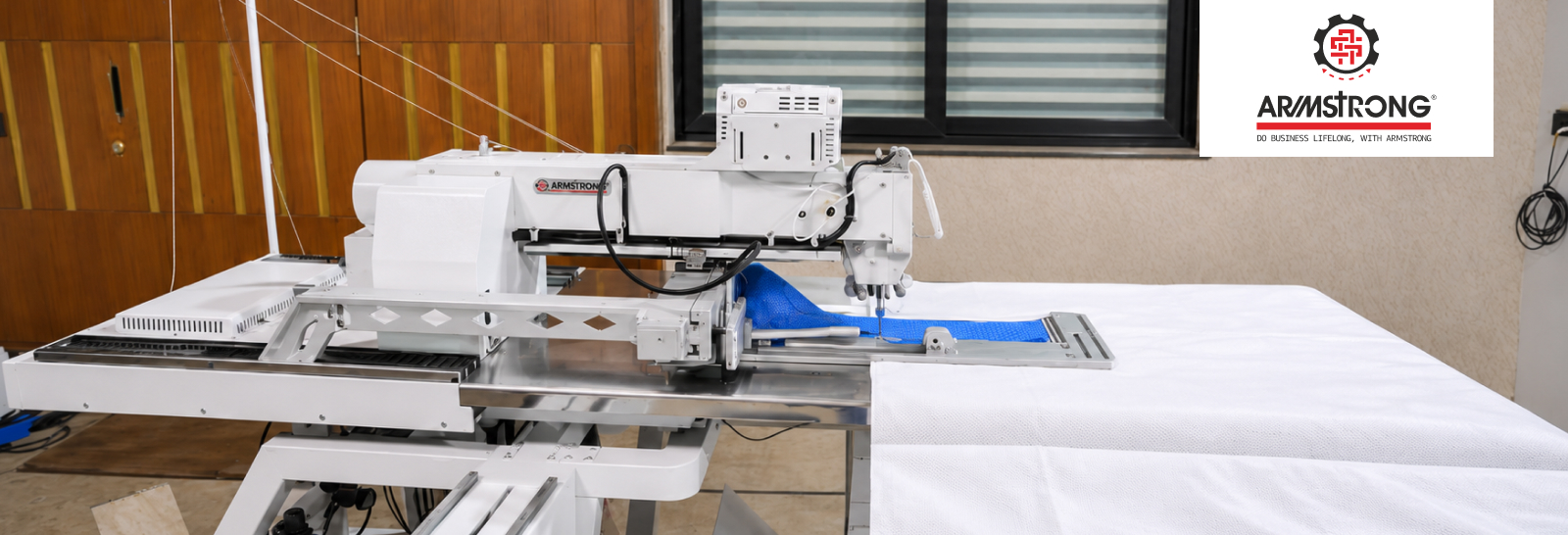
A flat working surface to support the fabric as it's being sewn makes the machine ideal for joining panels and other flat sections. That's the purpose of Armstrong's Single Needle Flat Bed Sewing Machine.
This machine sews the base of a new bag. The Armstrong 502HD Bottom Sewing Machine with Auto Cutter will work with PP, HDPE, leno, BOPP, non-woven and multiwall paper sacks. It has an auto cutter that cuts the thread at the end of the seam.
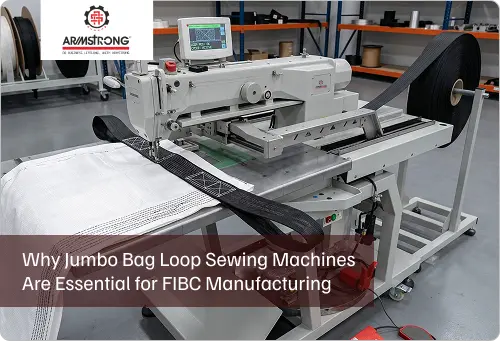
Jumbo bags are lifted via their loops so the seam on the loop is very important and needs to be good. Armstrong's Jumbo Bag Loop Sewing Machine has pre-programmed patterns for the cross corner, side seam, belt and U panel loops. Available in LS200-4030 and LS300-5030 models.
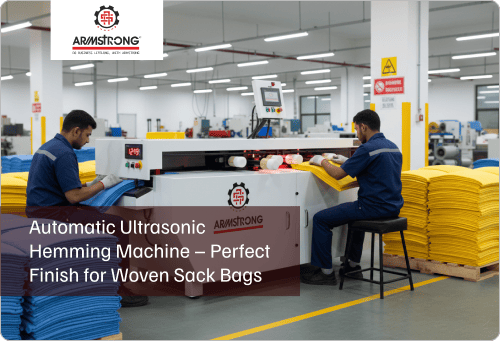
Unlike conventional sewing machines, this equipment does not use a needle and thread. It uses ultrasonic vibration and heat to join the edges of thermoplastic woven material. Armstrong's Ultrasonic Woven Sacks Hemming Sewing Machine is designed for woven sack hemming.
Each machine performs a specific task. A bottom sewer cannot sew lifting loops, and a bag closer cannot produce another bag. This is available through the product line of Armstrong’s Big Bag Sewing Machines
Each material is going to behave in a different way under the needle so the machine setup has to be changed as well.
A woven bag sewing machine requires even feeding of the plastic tapes; otherwise, they'll slip. The stitch and edge fold have to match the bag construction.
Jute is thick and rough. A gunny bag sewing machine will require the correct needle and thread to get through it as the needle and thread will be breaking all the time.
Multi-layer paper sacks can tear if the stitch is too tight. In some applications, tape is applied over the seam to prevent the powder from leaking.
Cotton is soft and generally very easy to sew. Even thread tension will give you a really good, consistent seam.
Excessive tension can damage the coating. Always run a test on sample bags prior to starting a full production run.
The bag design will determine which part is to be sewn and which machine is to do the sewing.
| Bag Type | Stitching Requirement | Suitable Machine |
|---|---|---|
| PP woven sack | Bottom seam | Bottom sewing machine |
| Filled grain or fertilizer bag | Top closing | Portable or conveyor bag closer |
| FIBC jumbo bag | Body seams and edges | Heavy-duty overseaming or lockstitch machine |
| FIBC jumbo bag | Lifting loops | Loop sewing machine |
| Leno mesh bag | Bottom seam | Bottom sewing machine |
| Multiwall paper sack | Top or bottom seam | Machine set up for paper, often with tape |
A sewing machine for bag making is not always the right choice for closing filled bags. Plants that manufacture and pack their own bags usually need separate machines for these jobs. For filled-bag closing options, explore Armstrong's Bag Closing Machines.
Before comparing models, check these points:
Bag closing machines come in three main operating types:
| Operating Type | How It Works | Suitable For |
|---|---|---|
| Manual (portable) | The operator carries the machine along the bag | Small units and several filling points |
| Semi-automatic | Machine is fixed on a stand; the operator guides the bag | One station with medium output |
| Automatic | Bags move on a conveyor through the sewing head | High-volume packing lines |
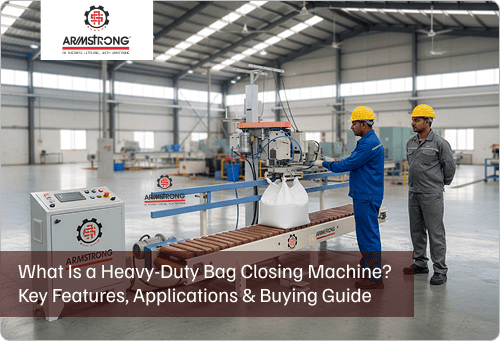
This portable bag closer sewing machine is lightweight and portable and can easily be shifted around from one filling point to another. In addition, it can be mounted using a spring balancer. The Armstrong portable machines include ST-7A, ST-7DA and NP-7A.
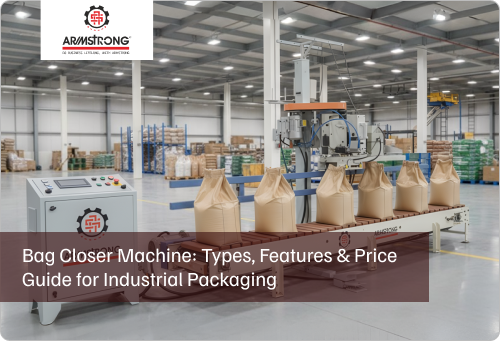
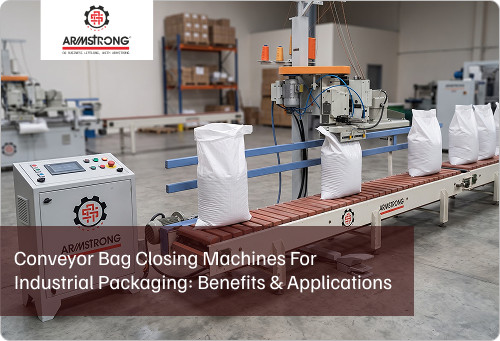
On large-scale packing plants, the stationary bag closer sewing machine is fitted onto a column positioned above a conveyor, such as the Armstrong AS 800/802 Pedestal Column series. Some models even cut the threads automatically. You will find out how it is done by referring to our guide to Conveyor Bag Closing Machines for Industrial Packaging
Before buying bag sewing machines, review this checklist:
Always ask for a trial using your own bags. The best sewing machine for a bag manufacturer is the one that's going to suit their actual way of working, not necessarily the one with the fastest speed.
Bag sewing machines are used wherever products are packed in sacks or jumbo bags.
A grain mill might only require a portable closer, whereas an FIBC manufacturer could well be looking for several machines (for body seams, edges and loops).
A few simple habits help keep bag sewing machines running smoothly:
A simple maintenance logbook will help the operator to identify recurring problems before they actually cause a production interruption.
There is no single price for every machine. The cost depends on several factors:
A portable closer will generally cost you less than a conveyor line or an FIBC sewing up. Look at the cost per good bag over a number of years rather than just the purchase price. Get a quote on the basis of your bag size, material and daily output.
In the woven packaging industry, Armstrong has been producing machines for over 40 years, and their machines are now available in more than 70 countries. Its product line includes all types of sewing for bag manufacturing, such as bottom sewing, FIBC seams, and closing filled bags.
When selecting a sewing machine bag manufacturers take support into consideration. Armstrong’s in-house building and testing of the machines guarantee that a machine can be suggested if the customer provides the details regarding their daily production output and bag requirements.

Choosing the right machine is all about your bags, not only the cheapest one. You need to determine what you will be doing first: producing bags, stitching lifting loops or sealing already filled bags. Choose a stitch type, needle configuration and automation according to your materials and production rate. The right bag sewing machines will give you even seams and will keep your production line going.
Explore more articles on innovation, engineering, and industry leadership.
December 7, 2024
September 8, 2025
October 15, 2025
November 25, 2025
November 26, 2025
December 29, 2025
January 27, 2026
February 23, 2026
February 24, 2026
August 10, 2026
August 20, 2026
August 26, 2026
September 16, 2026
September 19, 2026
October 31, 2026
 Previous